Sometimes, the smallest of things pack in the largest of wonders.
Memmingen is a quaint little Bavarian town, popularly known as the gateway to the Allgäu (a region across Germany and Austria that stretches across the Alps). Most tourists use Memmingen as a base when traveling to the Bavarian Alps or the Neuschwanstein (sleeping beauty) castle as this little town has an airport and it’s quicker to access the Alps from here rather than from Munich or Stuttgart.
Oh, but, this dreamy little town is more than just a gateway to the Alpine region. It is a charming, vibrant little town with colorful townhouses and cobblestoned alleys which was thankfully left unscathed by the World War II destruction that left most of Germany in shambles.
One of the prettiest market squares we’ve seen
We visited Memmigen on a sudden whim; decided to make the slight detour on our way back home from Füssen. So, with no list of things to do and places to see, we decided to just walk around this medieval town for a few hours and see what little surprises were in store. And, we were not disappointed! At every corner, we ran into one wondrous thing or the other – a historic building, a brightly painted house, a pretty stream, an interesting sculpture, a beautiful little chapel… we were simply delighted at every turn.
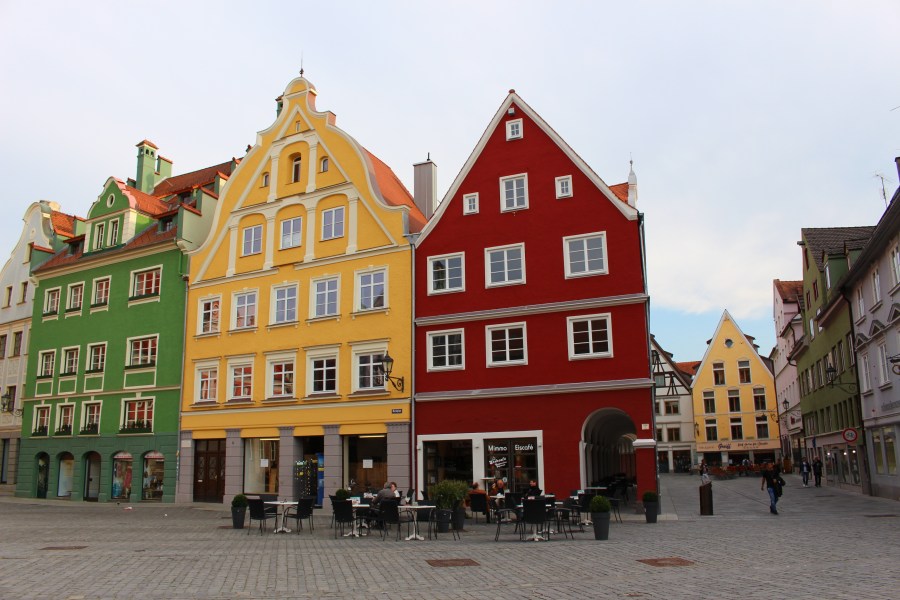
We started at the Marktplatz, the city centre, which is generally the best place to start at in any town. But this market place was unlike any others we’d seen. Colorful buildings adorn this little square and most of this little town. You’ll see these brightly painted buildings all around town.
We just fell in love with them
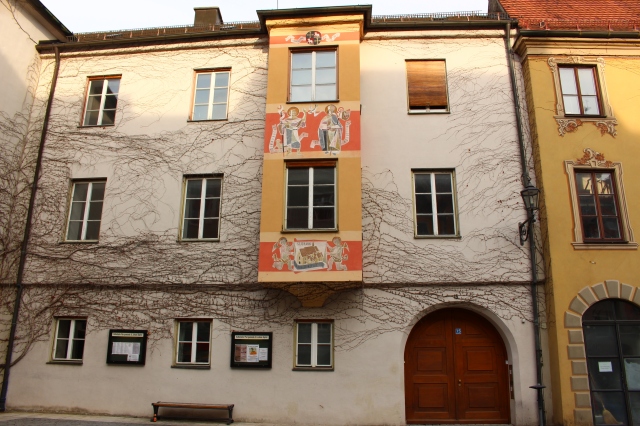
This intricately painted building you see in the pictures below is Memmingen’s Steuerhaus (tax house). It takes up most of the market square.
It was a bright sunny day and we basked in the warm spring sunshine
Right next to the Steuerhaus is the Rathaus (town hall).
We quite liked the dome design of the Rathaus, especially the centre dome with its shuttered windows
We continued walking towards the other end of the square.. just next to the Steuerhaus is the St. Johann church.
A closer look at the artwork on this church
And just around the corner from here, is the Blaue Saul, the blue (corner) column.
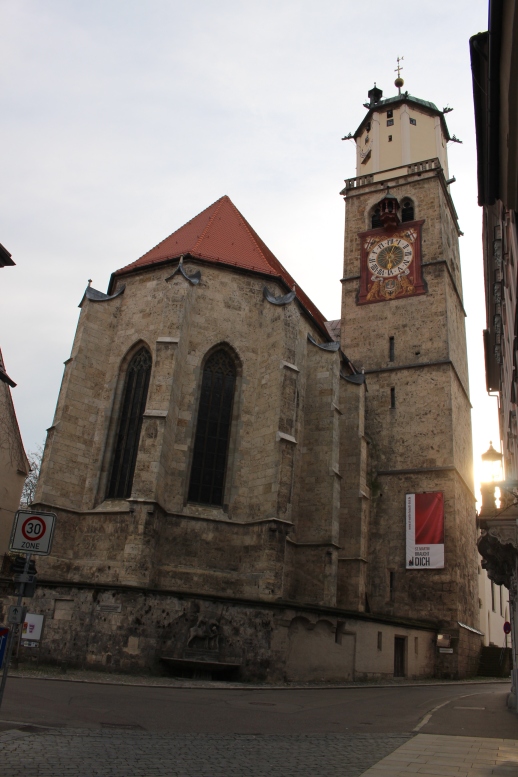
We walked on straight ahead from the blue column, toward the Sankt Martinskirche (St. Martin’s church).
The church was unfortunately closed.. so we walked back down the street, toward the little stream that we’d seen opposite the blue column. The Stadtbach (town brook)runs through most of this little town making the little place all the more magical.
We just followed the stream admiring the hurriedly swimming fishInteresting building art at Weber am Bach, a historic 700-year old hotelAn interesting equestrian statue of Welf VI
Welf VI was a 12th century Lord of Memmingen and Duke of Bavaria. The sculpture is quite an interesting portrayal of the Bavarian lord – you can see him riding with a globe under his horse’s hoof and his naked wife on the palm of his hand.
We continued walking around the Altstadt (old town) area. We came across an interesting historic gate. Apparently, there are ten such gates/towers and about 2 kilometers of wall around the Altstadt from several centuries ago that is still preserved.
We then arrived at the Fischerbrunnen at the Schrannenplatz.
The Fisher FountainBet there’s an interesting story behind the fisherman’s expression…
The beautiful red building in the background is the Goldener Lowe (Golden Lion), the city’s oldest wine tavern
The Schrannenplatz was brimming with locals – kids frolicking in one of the other fountains in the square, people sitting around the little cafes sipping on their evening coffees, and some others cooling off the hot day with some ice-cream.
We took a right in one of these little lanes, again just following the stream..
It was nearly 8 PM and it was still so bright outside; just love spring!The little canals and the bikes around took us briefly back to Amsterdam
It is such a picturesque, fascinating little town. We walked on at a lazy pace, reveling in the beauty that surrounded us.
Oh what we would give, to live in one of these cozy houses by the stream
Memmingen reminded us so much of Ulm (where we currently live). Little streams flow through Ulm as well and the city centres are quite similar, although more half-timbered and less colorful buildings in Ulm and definitely lesser crowds in Memmingen, even for a Saturday evening.
The Frauenkirche, Church of our Lady
Dusk was slowly settling in and flocks of birds were headed home high above the Frauenkirche. In front of the church was a cozy little park.
Frauenkirchplatz
After a short break in the park, we slowly traced our steps back to the town center, taking a different route.
This fun gang of girls excitedly posed for usWe ran into another gang of girls on our wayNot so fun though; these girls appeared to be engrossed in some serious conversation
Now, with all that walking, we had worked up a nice appetite and were ready to check out the local food and brews. We just walked around the block that had a whole bunch of restaurants and ended up at the Moritz Memmingen. It was a lovely restaurant – good food and good local beer.
When in Memmingen, drink a Memminger
We’d had the Memminger Weizen before, when we had first arrived in Ulm. It’s a delicious wheat beer!
We would have loved to spend more time in this charming little town but it was time to hit the road. We were so glad we had decided to make this impromptu stopover for a short few hours in Memmingen. We were thrilled to discover this little treasure not too far from home.
Night falls over the Kreuzherrenkloster as we say goodbye to beautiful Memmingen
The little towns of Germany continue to delight us leaving us with beautiful memories that will be lovingly cherished for a long time.
Prost to the much-awaited craft beer revolution in Germany!
The Craft Beer Revolution kicked off later than one might have expected in the fatherland of beers. This is understandable though; one does not go messing around willy-nilly with a country’s national beverage, whose purity has been legally defined by its people, over 500 years ago. Certainly not to satisfy the whims of hipsters. One can taste the stubbornness of tradition in the lagers and weizens brewed by these bearded old brew-masters who look like they personally tapped the barrel back when Julius Caesar stopped by for a pint. Now though, a silent revolution is fermenting in hidden little pockets of Deutschland, which aspires to bring down that psychological wall which has kept out those sacrilegious experimentation that neighbors like Belgium embraced generations ago. We have been seeking out such places and here are some of those craft beer haunts in Germany we think are worth a visit.
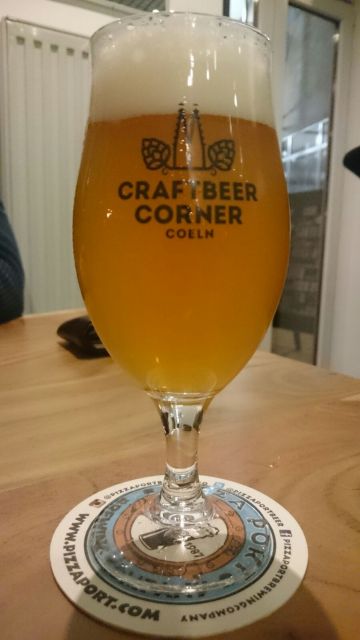
Craft Beer Corner, Cologne
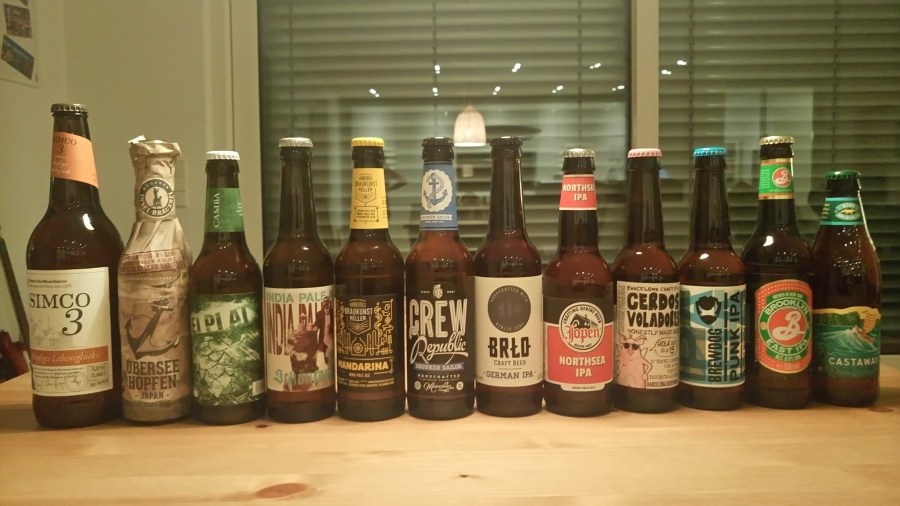
If you are a craft beer enthusiast looking for good craft beers in Germany, we assure you, you will feel like you’ve finally come home at Craft Beer Corner Coeln. And, if you’re an IPA lover, you’ve hit the jackpot as these guys have a horde of great IPAs! Craft Beer Corner is one of the best places for craft beer in Germany. They not only have an amazing collection of craft beers on tap but also a great collection of bottled beers. What’s even more cool is that you not only get to drink craft beers from Germany but also craft beers from all over the world! You can get pretty comfortable here never wanting to leave!
Our recommendations– We loved ALL of their beers but loved Crew Republic’s Drunken Sailor IPA and Pizza Port’s Today was a good day IPA best.
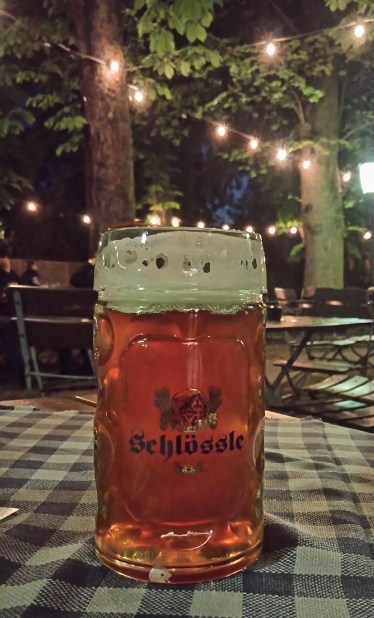
Brauerei Schlössle, Neu Ulm
The Schlössle (pronounced Schloessle) brewery in New Ulm, Bavaria (just across the Danube river from Ulm, Baden-Württemberg) is one of our cherished finds from our craft beer hunt in Germany. It was the first place we drank German craft beer and were quite pleased to finally see Germany warming up to the craft beer culture. Schlössle brews some pretty neat hoppy ales – the High Five Hop and Orange Summit are our favorites. Although not one of our favorite German IPAs, their Strong Jack IPA is quite unique with its rye and wheat malts and worth a try. Their Tripel and Chocolate Porter are pretty good beers as well. Schloessle is one of those traditional German brewhouses where the interiors have a certain old-world homely charm to it and where you can get your fill of lip-smacking local delicacies. It’s well worth a visit not only for the beer but also for a true Bavarian experience.
Our recommendations: High Five Hop and Orange Summit
Schwanen Brauerei, Ehingen
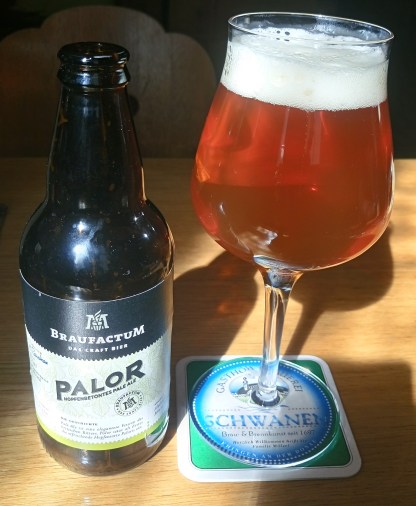
Schwanen brewery is in the little south German town of Ehingen, popularly known as the ‘beer culture’ city. Ehingen has 4 breweries including Schwanen and all of these brew the traditional style of German beers. Schwanen however has a great collection of ales and stouts from some popular German craft breweries like Camba, Braufactum and Riegele. Camba is possibly one of our most favorite craft breweries in Germany. They have a huge variety of craft beers and every one of their beers that we have tried have been absolutely kick-ass. They have quite a selection of IPAs, pale ales, and oak-aged beers.
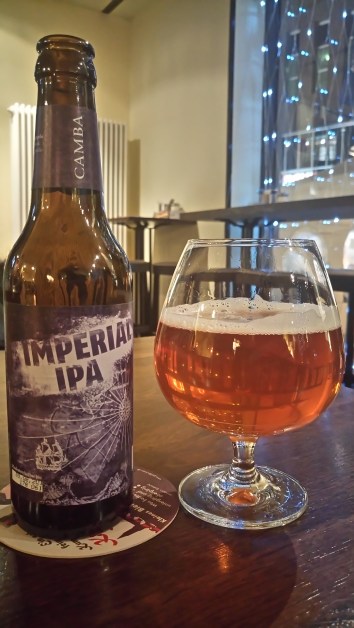
Cafe Henry used to be a typical cafe until some time late 2016 when they started serving craft beers. During one of our regular visits to the cafe to grab a quick bite and a beer, we saw that they had a separate craft beer menu. The quick stopover turned into a long night of celebrating our discovery. It had not been the easiest living in a little German town as craft beer enthusiasts – craft beers here are a rarity and we usually are scouting the Internet to find the nearest city with some hoppy ales. So, you can imagine our insane excitement at finding this craft beer menu in the most unexpected of places. Aaanyways, if you happen to be in Ulm or at a Cafe Henry elsewhere in Germany, be sure to check out their craft beer menu. They have ales from popular German breweries like Camba and Insel Brauerei and also ales from some of America’s best craft breweries like Stone, Brew Dog, Sierra Nevada, and Brookyln.
Our recommendations: Stone IPA, Camba’s Imperial IPA, Brewdog Punk IPA, and Sierra Nevada Pale Ale.
Braustelle, Cologne
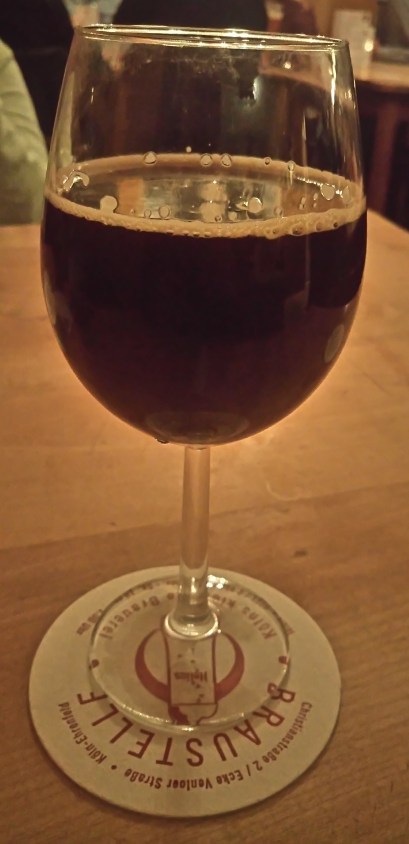
Braustelle is a microbrewery in Cologne with a fine collection of ales and stouts. There are craft beer bars like Craft Beer Corner Coeln but Braustelle is possibly the only craft brewery that we could find within the city limits. It seemed to be a popular local hangout. It’s a small place and gets filled up fairly quickly so it’s best to get here early or make a reservation. They also run regular brewery tours for beer enthusiasts so you’ll see the brewmaster hopping about. They brew some pretty unique stuff and of course they have a Kölsch (typical German Pils that has a name of its own in Cologne) on their menu. They call it Helios and it’s one of the good Kölschs in Cologne.
Our recommendations: Kraftstoff Pale Ale MP’s classic and Helios
Urban Monk, Ulm
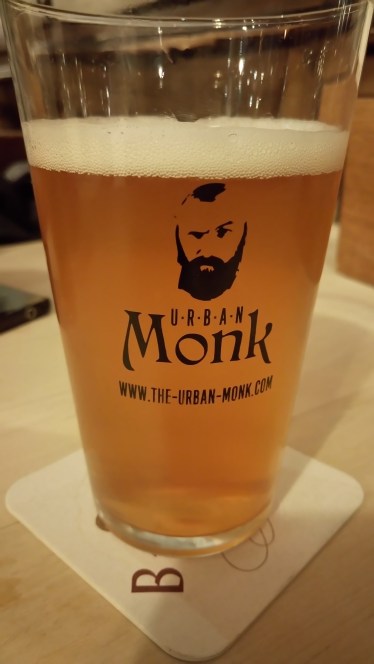
Urban Monk is Ulm’s only craft brewery at the moment. They are fairly new and are still experimenting with their beer styles. Their collection includes a few ales and a porter. While we have tried them all and feel that their beers still need some work, we do find their ales promising. They have partnered with Barfüßer, a traditional German brewery located in both Ulm and Neu Ulm. Head over to Barfüßer if you’d like to try Urban Monk’s beers.
Our recommendations: Sunshine Ale
(Watch this space for more as we discover more of Germany’s craft beer haunts!)
When a city is a called a ‘beer culture’ city, it of course piques our interest.
We are always on the look-out for German craft beer and it’s not too common especially in the neck of the woods where we live, in south Germany (yes, where Munich, the land of great beer and Oktoberfest is). If you are a craft beer fanatic, you’ll know what it is to crave beyond the traditional German Pils and Weizen (which is your dominating beer of choice in the Oktoberfest by the way). Anyways, during one such hunt, we chanced upon this ‘beer culture’ city called Ehingen and were thrilled to see that one of their breweries had a great craft beer collection and the city was just a 30 minute drive from Ulm (where we live). Ecstatic, we made plans to visit the place.
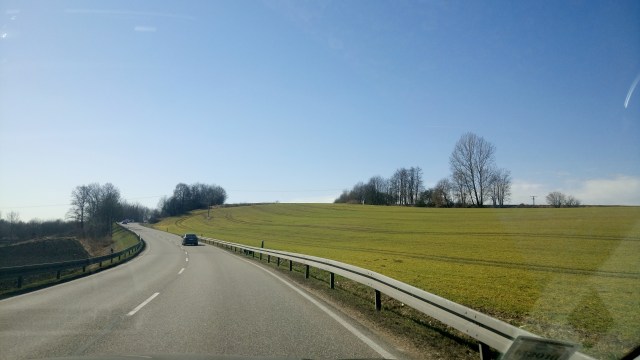
It’s surprising how late-risers like us can rise and shine quite early when there’s a good pint of beer beckoning. It was a beautiful sunny day with blue skies and green fields. Spring is almost here; the temperatures are getting higher but the trees are still barren and we were pleasantly surprised to see the lush green meadows.
A crisp and clear day
We had the most wonderful short drive to Ehingen – we passed by gorgeous little forests with the Danube river playing hide and seek every few kilometers. We saw a bunch of deer running (Steve didn’t believe me and said it must have been foxes and in just a few meters we saw a sign board indicating deer in the area. Ha!). It was unexpected as we usually find plenty of cows, sheep and horses grazing but never deer, not so close to the expressways. There was also a splendid Christmas tree farm along our route and it was fun to see the teeny weeny Christmas plants sprouting.
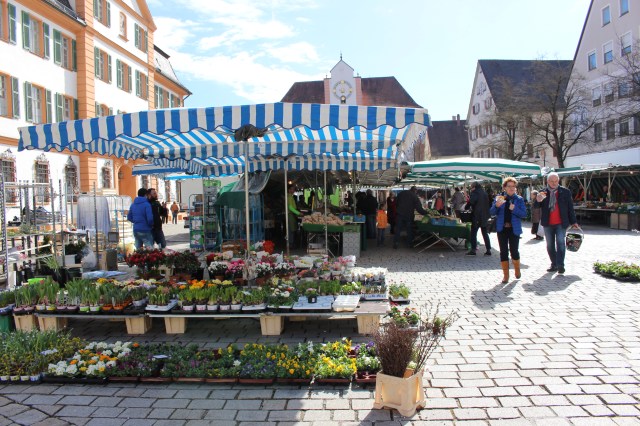
In no time, we were in Ehingen parking our car (we parked at the Tiefgaragen Lindenplatz Parkplatz 2 – very accessible to the town square and it’s free of charge on the weekends). We walked up to the Marktplatz (city center) in just a couple of minutes (it’s a small town). It was market day in the town square and they had little stalls selling a wide variety of fresh fruits, vegetables, flowers, and some local beer and snacks too.
Saturday (farmers) market in the town square
The market day happens every Saturday in every little to big German city – it is basically a farmers market. We still haven’t made it to the one in Ulm and it was good to finally see one of these.
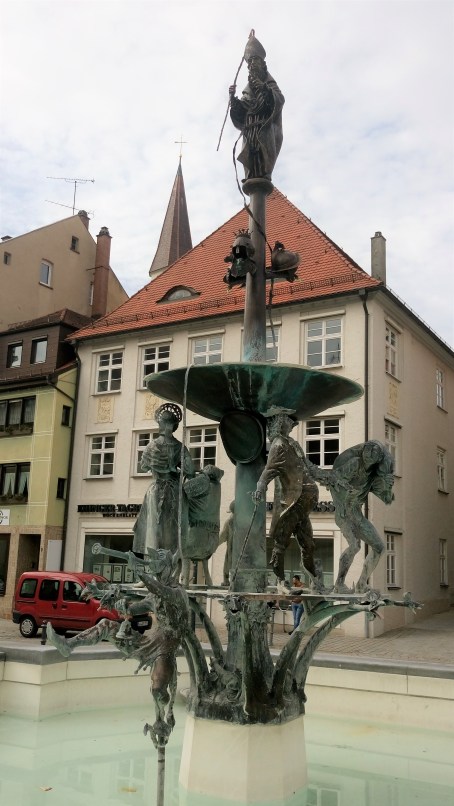
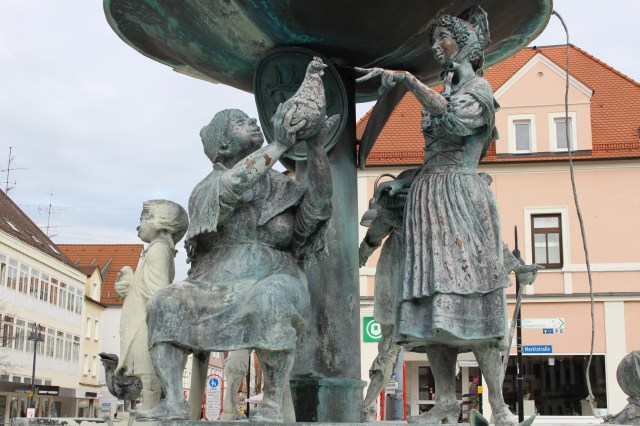
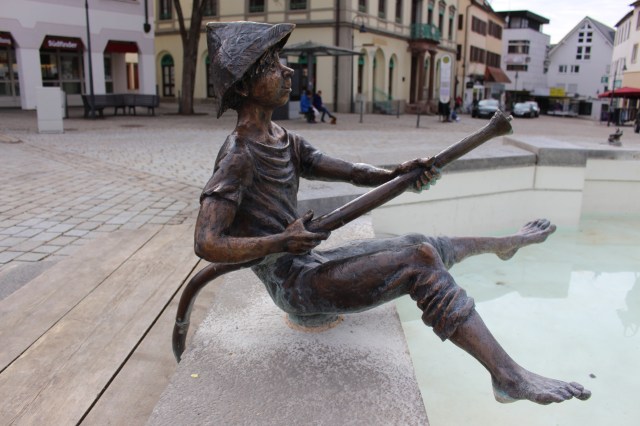
The market square features a fountainwith some interesting characters.
Some close-up shotsChicken anyone?He was getting ready to hose them all!Care for a drink from the frog prince’s crown?
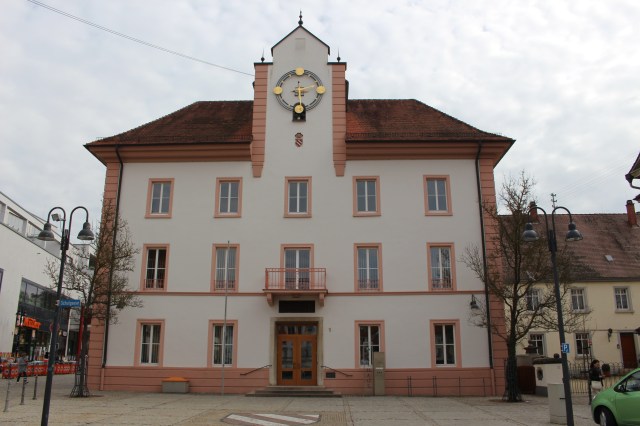
On the other side of the marktplatz is the Rathaus (town hall).
A more modern Rathaus than we expected
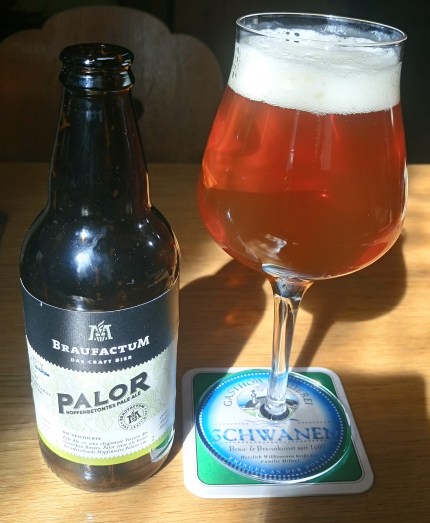
We then headed over to the Schwanen Brauerei, one of the 4 breweries in the city. The Berg brewery seems to be quite a reputed brewery especially in this region but if you’re into ales and craft beers, you should head over to the Schwanen brewery. These guys as well have a good collection of traditional brews but we were there just for their craft beer collection – the Schwanen guys don’t brew any craft beers themselves but have a great collection of kick-ass ales from some of the well-known German craft breweries. Our favorites include Camba, Braufactum and Riegele. We’d not had Braufactum before and we thoroughly enjoyed their hoppy pale ales. We had a mighty crate of beers hitching a ride back home with us!
If you are a craft beer drinker and you find yourself in the Baden Wurttemburg state of south Germany, you should make your way over to this brew-pub. If you’d like to explore all 4 breweries in Ehingen, check out the historical sights of the city, and don’t mind a good hike, you could opt for their Bierwanderweg (beer culture trekking). Or, if you’d rather hop on a large bike with friends or family for a short countryside tour enjoying your beer at the same time, you should check out the beer culture bike that Ehingen offers. The city is quite a popular stop for hiking and biking trips along the Danube river.
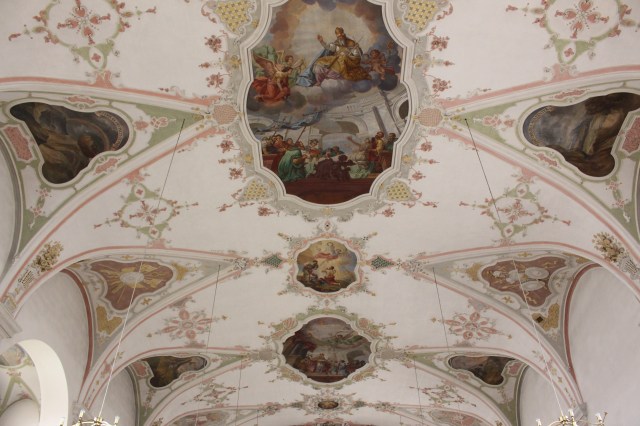
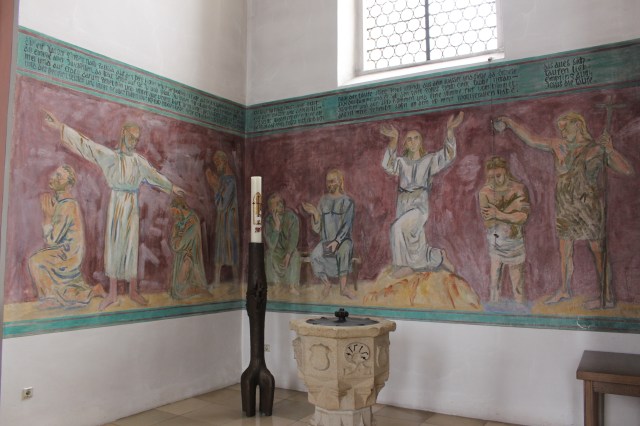
Our next stop was the St. Blasius Church. This small church is sheer beauty – the baroque style, the exceptional ceiling art, the unique paintings on its wall, the large courtyard – simply awe-inspiring. There are two other main churches (the Church of our lady and Sacred Heart church) and these three church spires dominate the Ehingen skyline.
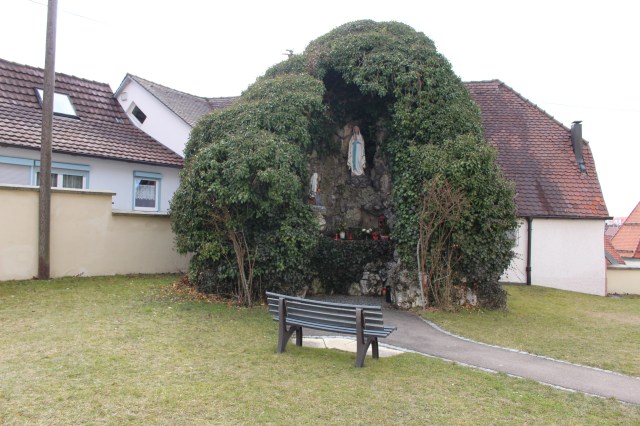
St. Blasius also includes a lovely Grotto (cave-like shrine)
We spent the next hour exploring more of the sleepy little town. We passed by several half-timbered buildings which is a signature feature of small German towns.
Ehingen Museum
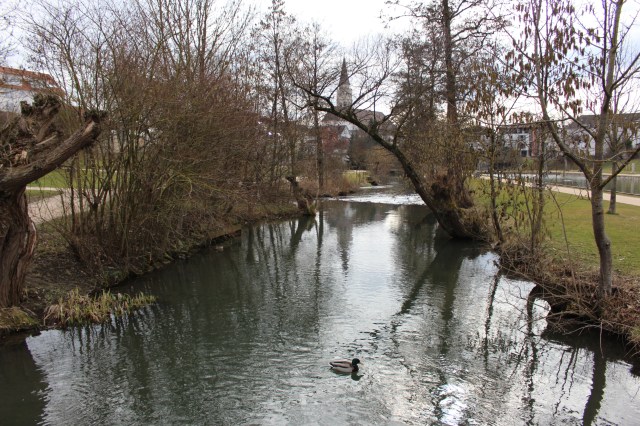
You should visit the Stadtgarten which includes a little lake called Groggensee, a lovely play area for the kids, a large walking/cycling trail and some interesting art in the midst of all of this. What we loved the most is the little Schmiech river flowing through the park making the place magical.
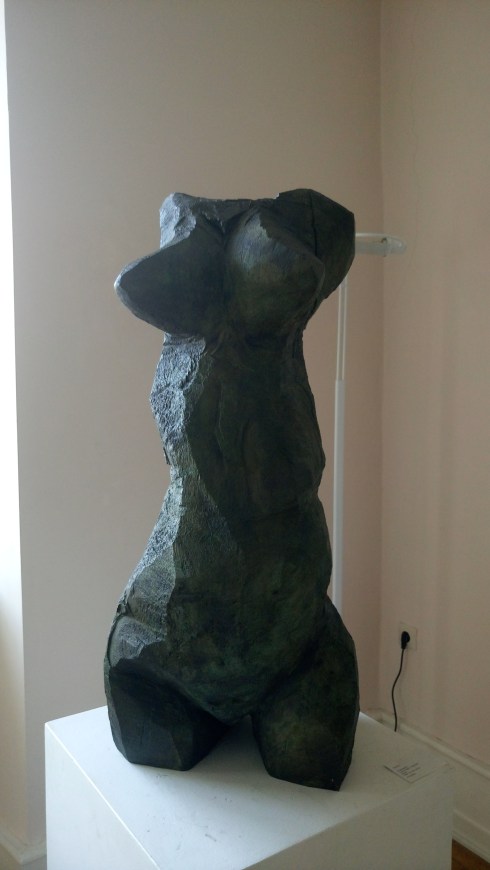
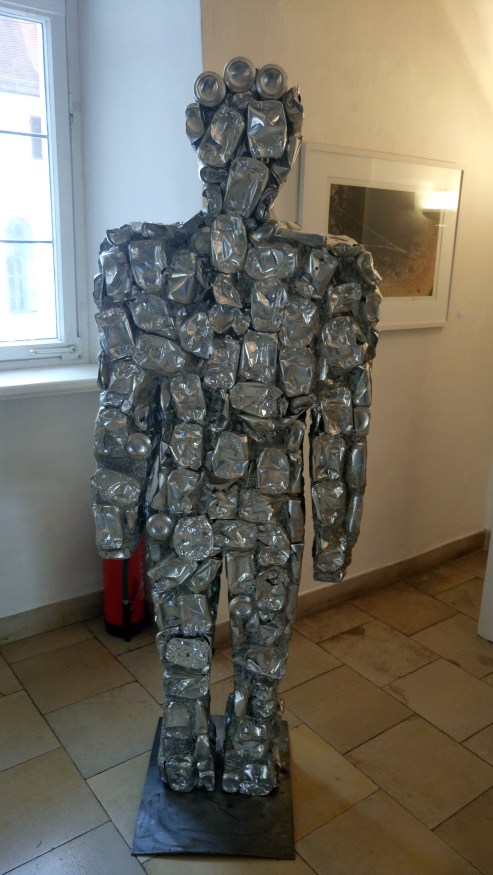
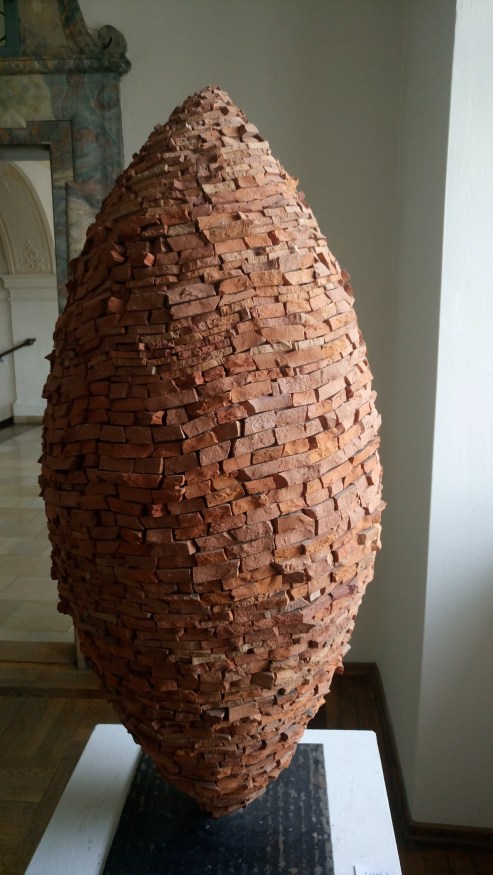
Our last stop was the Schloss Mochental. It is a relatively new castle featuring modern works of art.
At the castle entrance
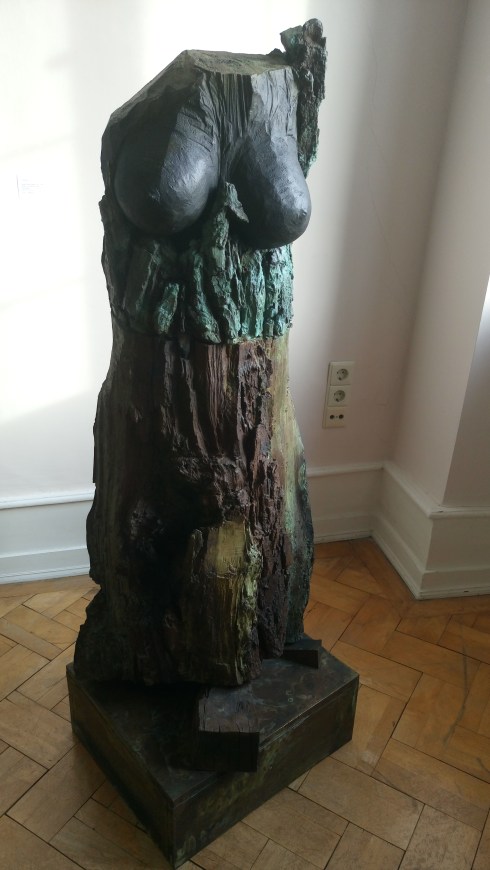
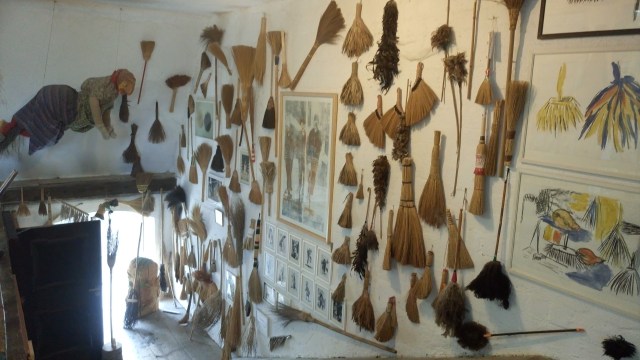
It is 10 or so kilometers away from the Marktplaz so we got our car out and drove there. If you are traveling by public transport, note that you’ve got a bit of a hike to get to this place but we can assure you that it’s worth the trip. They have some extraordinary contemporary art works on display and a pretty rad Basen (broom) museum.
IntriguingSeemed like a popular art formTin man says helloThis one would have taken some effort to make!This was just one section of the broom museum – they had tons of all types of brooms and even an ancient vacuum cleaner on display on the other side
The views from the castle rooms are quite lovely as well – all in all it was a wonderful visit to the castle.
It was time to make our way back home. We left the little town with a big stash of beautiful memories as everlasting souvenirs.
It is sleepy little towns like Ehingen that make Germany the spectacular country that it is. Their half-timbered houses, their baroque churches, their old world charm, their fascinating culture, their little rivers and streams – this is where the magic of this beautiful country unfolds.
Two little picturesque German towns surrounded by the mighty, stunning Alps.
There’s nothing like the Alps to fill you with child-like glee and make you squeal with delight at every little sight of them. We just cannot seem to get enough of them and have been very fortunate to see the extensive, breath-taking range of the German, Austrian and Swiss Alps.
Füssen and Schwangau are located in the midst of the Allgäu Alps – which extend across Bavaria in south Germany and Tyrol & Vorarlberg in Austria. The little town is about an hour from where we live (in Ulm). After an exhilarating drive, we arrived at our Scottish/Irish themed hotel where we had a fabulous night of whisky tasting. It had been so long since we had drunk good whiskies in this beer-famed land. We lost count of how many whiskies we’d had – each one better than the last. They had SUCH an amazing collection of whiskies from all around the world! This was our primary motivation to book this hotel of course. The hotel itself was quite nice – friendly staff and located very close to the Hopfen am see, one of the many lakes in the region.
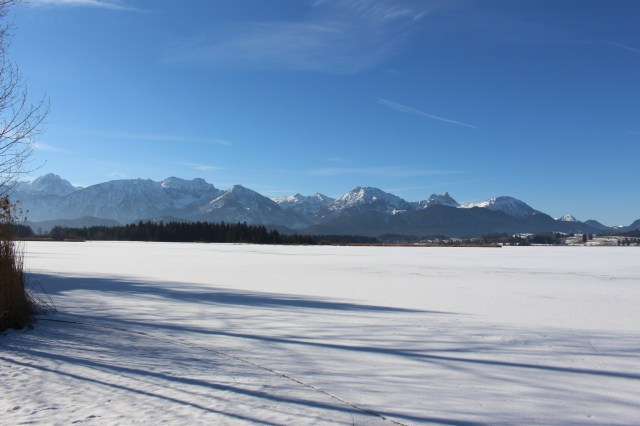
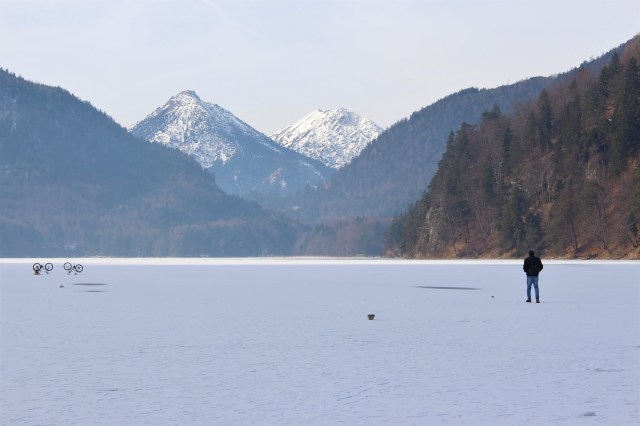
The lake was frozen of course, considering the sub-zero temperatures we’d been having through January. And, in just a minute we were away from the hotel and on the lake, taking a walk on the ice sheets. We were just blown away by the beauty that surrounds this small town.
Hopfen am See, Füssen
It was our first time walking on a frozen lake and we weren’t sure how far out we should venture especially considering there were some sizable cracks across the lake and we were the only souls on the lake!
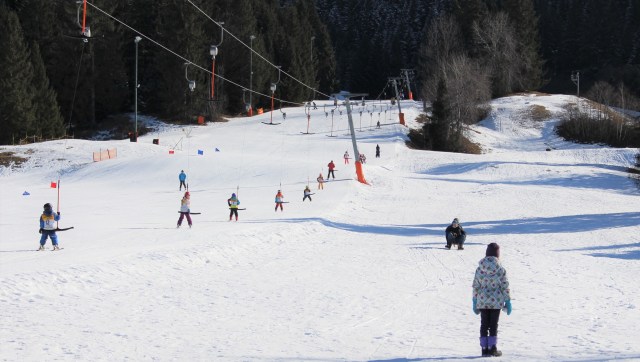
We then headed over to the Tegelberg mountain in Schwangau. This was just a few kilometers out from Füssen. Tegelberg is known for its winter sports and you can find a whole bunch of people skiing including teeny kids. They all row up in their groups, all padded up and carrying their ski gear, looking super excited with no trace of fear – ah, they were such fun to watch!
Foothills of Tegelberg, Schwangau
We took the Tegelbergbahnor cable car up the mountain. It was a beautiful but somewhat suffocating a ride. The little cable car fills up nearly 45 people standing shoulder to shoulder with their noses almost touching the glass door! It was such a surreal experience compared to our cable car rides in Switzerland. But when we got out of the car, the views took over everything else. The Alps oh, the gorgeous alps .. they were everywhere.
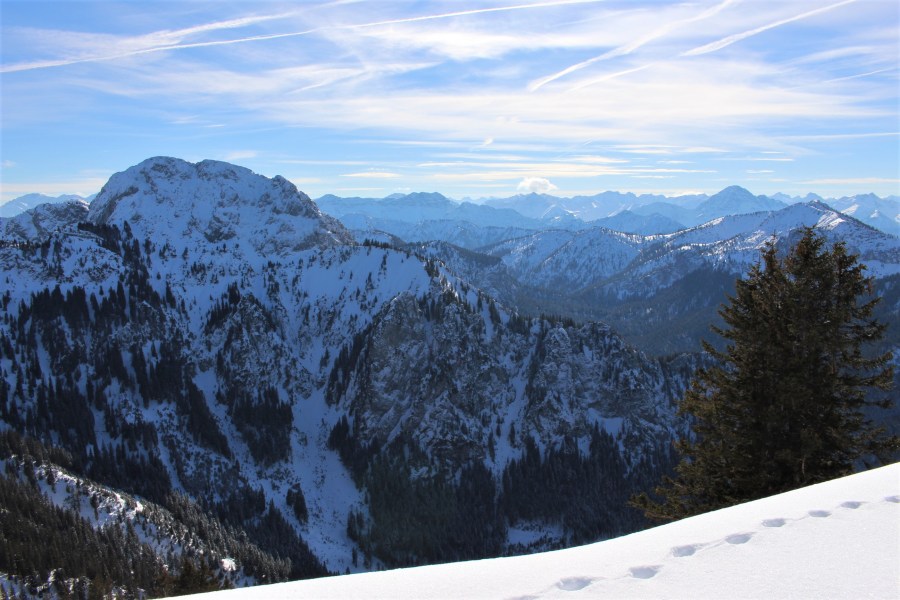
Meet the Allgäu Alps
We decide to hike up the snow-covered Telgelberg mountain to get to a higher point. It was a steep, slippery climb but with the prettiest views all along the way.
All we could feel was a deep sense of bliss and contentment
We make way for skiers, young and old.. we also make way for a dog, a cute labrador that climbed up the hill so effortlessly wagging its tail ever so cutely.
Huffing and puffing, we make it up to the top, and are rewarded with breath-taking views. And, excited to take a peek down the big mountain, I take a few steps dangerously close to the edge.. and I am washed over with the sweetest rush of fear and joy.
We could have stood here forever…
We just stand there in amazement with all the other guys that made the climb.. just soaking in all this wondrous beauty. After a bit, we make the descent. Going downhill is always tricky and going down a snow-trodden mountain is even more tricky.. keeping our balance and taking small careful steps, we make it down to the restaurant. We get some grub and beer and sit down to have our lunch by this gorgeous view.
Brew with a view
Reluctantly, we make our way back to the cable car and down to Schwangau. We then drive over to Füssen.
Hello beautiful
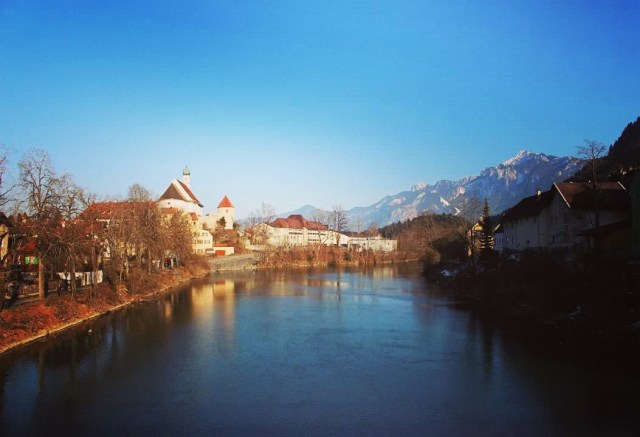
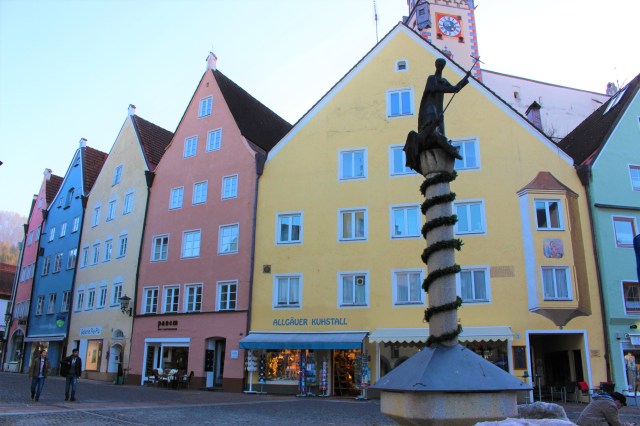
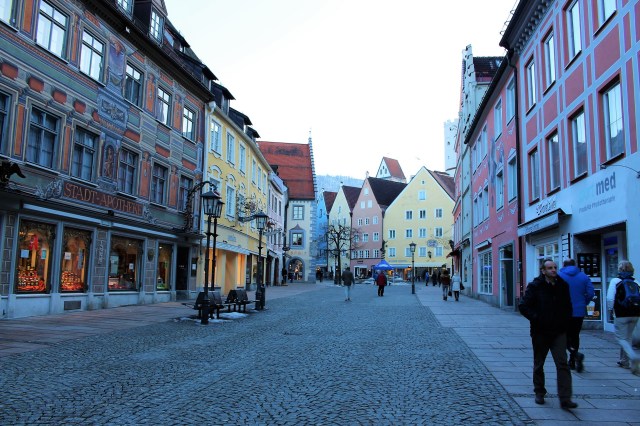
Füssen is such a pretty little town. It is known for the Neuschwanstein castle which technically is actually in Schwangau.. People stay at Füssen when visiting the castle and are just rushing through to their next destination and barely explore this gem of a little city. Not only is it picturesque with the lovely Lech river flowing through and with the Alps in the background, it is rooted deep in history and tradition and was luckily untouched by the world war destruction.
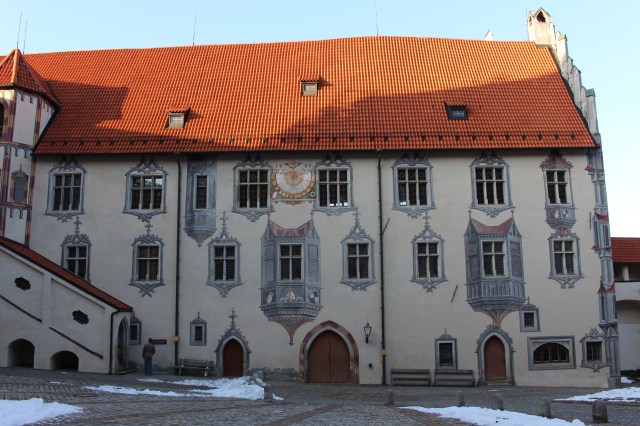
Füssen has a little castle of its own – Hohes Schloss
We got to the Hohes Schloss / High Castle a little late and we couldn’t check out the inside but were able to walk around the inner courtyard and admire the unique art decor of the castle.
Courtyard of the Hohes Schloss – this unique artwork is replicated all over the little town
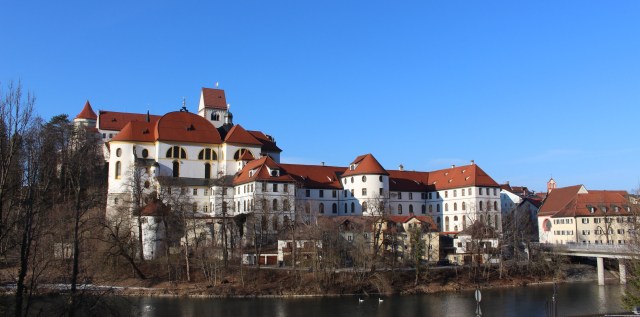
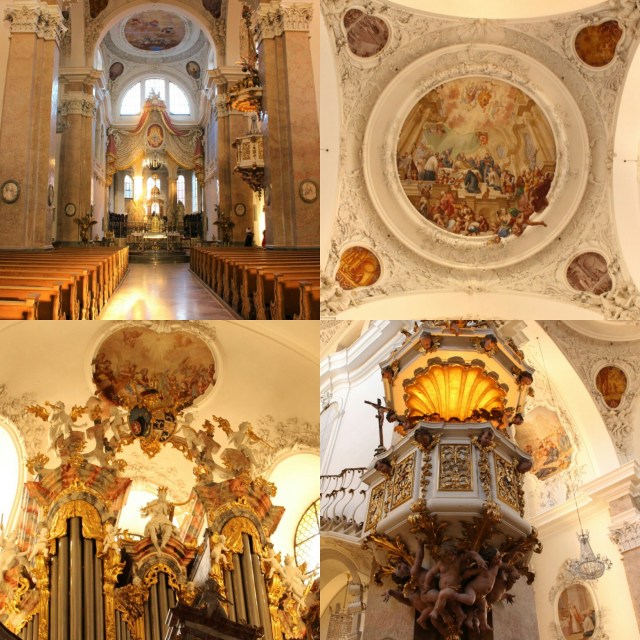
On the way to the castle is the Basilika St. Mang – the interiors and ceiling art of this abbey church is simply beautiful. And, they have the most embellished church organ I have ever seen. And we were in love with their cherub pulpit – so intricate and unique! Simply loved the church. Germany has some of the most beautiful churches.
Basilika St. Mang, Füssen
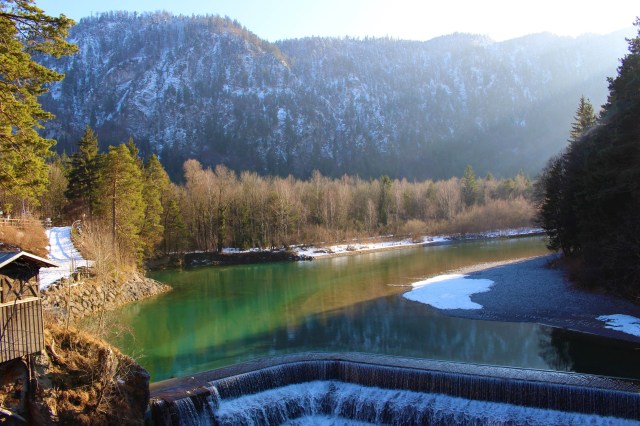
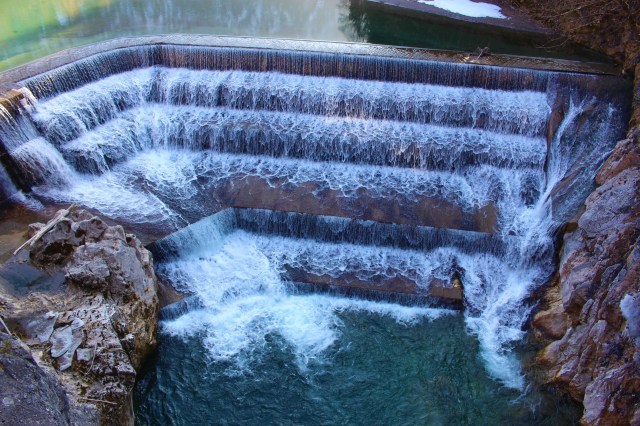
Not too far from the town is the Lech Falls. This is just the prettiest little falls ever in the midst of surreal alpine beauty. The gorgeous emerald waters of the Lech river fall down and flow around the city of Füssen.
We just walked around the area of the Lech Falls taking in all the beauty.. Slowly, we make our way back to the town centre – Altstadt.
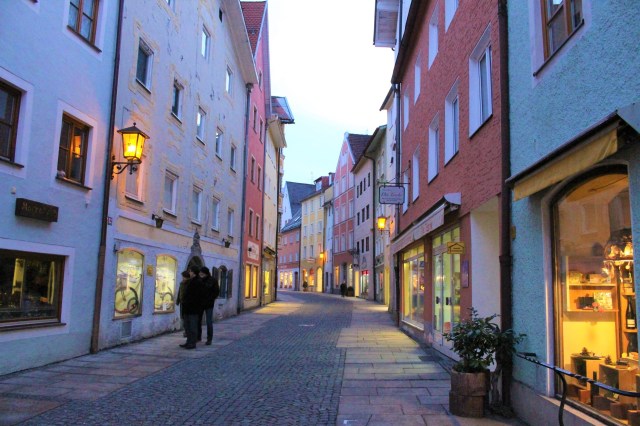
Pretty little streets of Füssen lighting up as dusk approaches
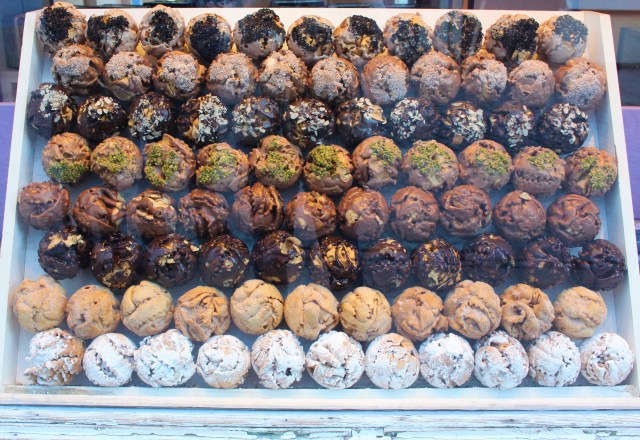
We make a short stop to pick up some Schneeballs a delicious local pastry that has been around for 300 years or so! It’s available in a multitude of flavors and being coffee lovers, we went for one in a cappuccino flavor.
After a few more strolls around the little town and a couple of local beers, we arrive at the Schlossbrauhaus in Schwangau. The two little towns are just a few kilometers apart and we sure did some back and forth in this one day.
This seemed to be a popular brewery in this neck of the woods and they claimed to serve some craft beer as well. Now that definitely got our attention and we were excited to try out their beers. Unfortunately, we were quite disappointed in their so-called “craft beers” which were really just the traditional German Pils and Weizens. We don’t mind the traditional German beers especially the wheat beers but their beers were a disappointing version of the traditional beers even. That said, it wasn’t all wasted time as they served some finger-licking local food! And, they had some sort of a local event that day and there was a whole bunch of locals dressed as kings, queens, soldiers etc. and it was fun just watching these finely dressed people gather around a few beers. We were just minutes away from the famed Neuschwanstein castle and no wonder we had royalty flocking the bar.
If you’d like a good pint in the area, you should visit the Allgäuer Stüberl or Hotel Hirsch (both serve some delicious Bavarian brews and lip-smacking local food). Not being a huge fan of the Pils, we usually stick to the Weizens when it comes to traditional beer in Germany.
At the Allgäuer Stüberl
At the Hotel Hirsch
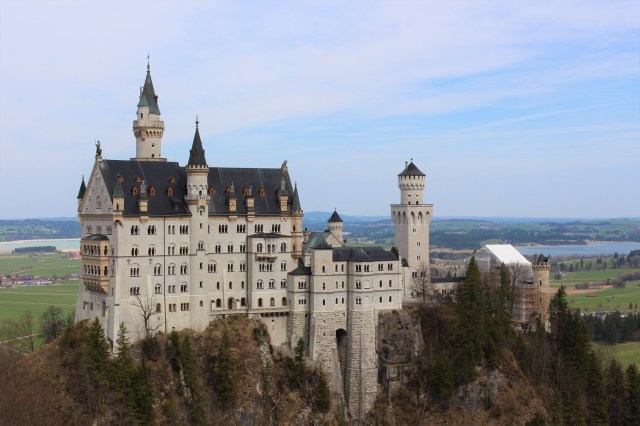
The next morning, we visited the Neuschwanstein and Hohenschwangau castles. So, to be honest, it was our last item on the things to do in Füssen. The Neuschwanstein is a pretty looking castle, inside out. But, the insane crowds that throng to it even during the coldest of winters and take a trip all the way here just to see the castle is beyond our understanding. Blame it on Walt Disney for making this “Sleeping Beauty” castle such an obsession with tourists visiting Germany. And no, this is not all that this beautiful country is about. Well, nevertheless, it is a beautiful castle with splendid architecture and is worth a visit if you’re in the area. And do take the short trek to the Marienbrücke, a little bridge not too far from the castle that offers a full view of the castle and some beautiful views of the surrounding area.
View from the Marienbrücke
Note that visiting the castle has to be carefully planned. You simply cannot be late for your reserved time slot – if you do, you will not be allowed to enter at all. We reserved our tickets online (we took the king’s ticket) and skipped the long queues to purchase the tickets. We took an English guided tour; the guide was friendly and did a decent job of recounting the life of King Ludwig II (known as the mad king). King Ludwig led a fascinating although lonely life and died under mysterious circumstances. He was obsessed with castles and swans among other things. The Neuschwanstein (new swan stone) castle has lavish and beautiful interiors and the art that adorns the walls are spectacular. The castle tour itself felt way too short and rushed; well, it had to be this way so it could accommodate the crowds that visit the castle everyday.
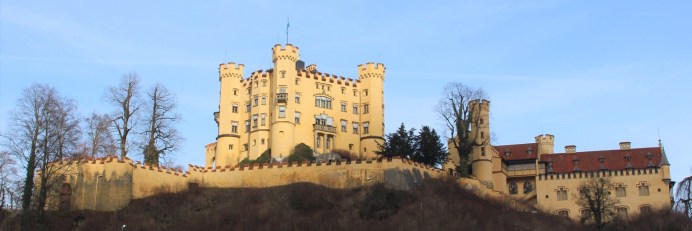
Our guide for the Hohenschwangau castle was more impressive, giving us some interesting, humorous anecdotes of King Ludwig II and his family. The interiors of this castle is just as lovely, may not be as extravagant and rich in its decorations but quite exquisite nonetheless. The artwork and the Turkish inspired designs are admirable. The Hohenschwangau stands on the ruins of the old Schwanstein castle and the Neuschwanstein stands on the ruins of the original Hohenschwangau. They sure mixed the heck out of these castle names!
The new Hohenschwangau
The castles are close to the Alpseewhich like the other lakes in the area was frozen. There were many more people out walking on this lake (some were even running and jumping) and this time around we ventured farther into the lake and had the most wonderful time.
Headed to the Alps – one slow step at a time on the Alpsee
For us, the castles were definitely not the highlight of Füssen and Schwangau. They are worth a visit for sure but you’d be missing out on SO much if you do not check out the sights in and around Füssen.
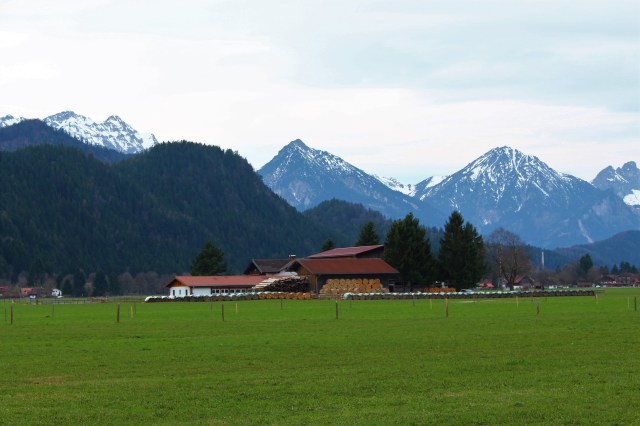
The dreamy Bavarian countryside where time stands still
Füssen and Schwangau are fairy tale towns even without the castles and we have some of our most cherished travel memories from these two little towns.
Belgium is possibly our most favorite country. It has so much history, culture, art and each city is so wonderfully different from the other. And, it has SO much good beer! It is the holy land of beers after all and the delicious Belgian brews was our primary motivation to go on our beer pilgrimage to Belgium over the Christmas holidays.
Even if you’re not a beer lover, you will find Belgium incredibly fascinating. The buildings, the walls, the people, the culture, the food – will fill you with unbelievable joy. The Belgians are a class apart – they are quirky, bold, friendly, fun, and artistic. You will find both contemporary and medieval art in the cities of Belgium.They have deep regard for their history and struggles and yet do not hesitate to experiment and keep up with modern times. Belgium has a unique mix of culture and culinary delights owing to its French and Dutch influences.
There is something for everyone in this wonderful country – whether it is admiring art, learning about the history of comics, taking a peaceful canal ride, climbing up the bell tower for gorgeous views, walking past medieval buildings, visiting beautiful churches, indulging in mouth-watering food, or just drinking a well-brewed ale – you simply cannot get enough of this fantastic country. And, if you are visiting Belgium during Christmas, it makes it all even more special.
We spent a short 7 days in Belgium visiting Brussels, Antwerp, Ghent, and Bruges. And, this made for the most remarkable, joyful holiday, and the perfect end to a great year filling us with lots of inspiration and energy to ring in the new year.
Take a look at our Belgian journey.
[Click the image or link below to see what these cities are like.]
A medieval, little Belgian town filled with incredible history, art, and architecture.
When we were planning our visit to Belgium over the Christmas holidays, we knew we had to make time for Ghent (also known as Gent). It is less than an hour away from Brussels and is often overlooked for the neighboring, more popular Bruges. Bruges is of course simply amazing and we as well are absolutely in love with the city but Ghent is a Belgian gem you don’t want to miss if you are in Belgium and have a few hours to spare. The crowds are lesser, there is no insane queue to go up to the Belfry, and it has pretty canals too. While there are some striking similarities between Ghent and Bruges, they couldn’t be more different.
A cloudy day at Ghent
And, Ghent, like Antwerp is an architectural marvel, although in different styles. Antwerp being a much bigger city has mostly contemporary styles whereas Ghent is full of older, medieval buildings. But both cities, Bruges, most of Belgium, and parts of the Netherlands all have the same distinctive crow-stepped gable style.
We got to Ghent as early as we could (considering the late risers we are) and it was a short, pretty train ride. We passed by a bit of the Belgian countryside which is nice but not as mind-blowing as the Swiss countryside or even the German countryside but appealing nevertheless.
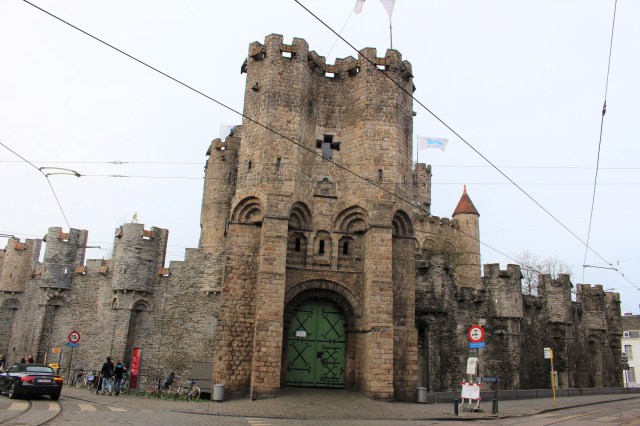
Gravensteen, medieval castle/fortress, Ghent
Our first stop was the Gravensteen or the Castle of the Counts. Much to our dismay, it was closed. Not sure why we were surprised considering it was the day of Christmas Eve. Although some of our plans are spontaneous, we are usually prepared at least in terms of checking out opening hours etc. but it was Christmas and let’s just say the Belgian beer and the Christmas spirit got the better of us. There were many others like us who went to the castle door, read the notice, and left disappointed. We felt bad that we’d missed it as it has a pretty cool torture chamber that we were intrigued about and wanted to see. But, we realized this would happen during our holiday as we were traveling during Christmas after all. Lifting our spirits, we headed over to the Belfry.
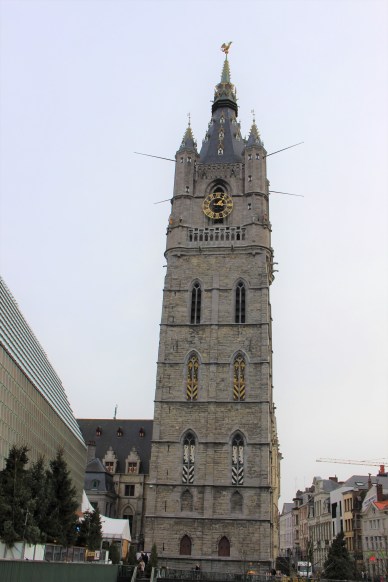
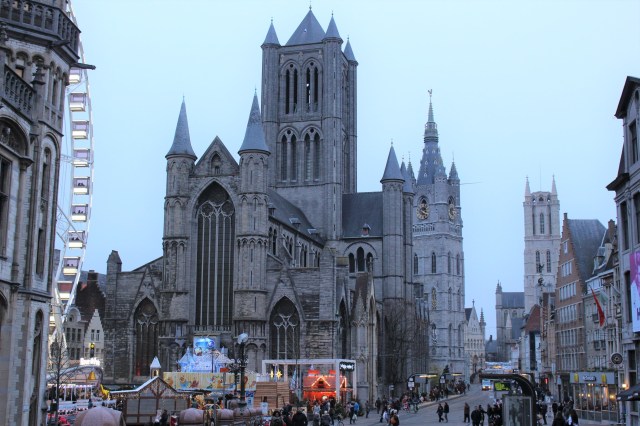
Belfry of Ghent
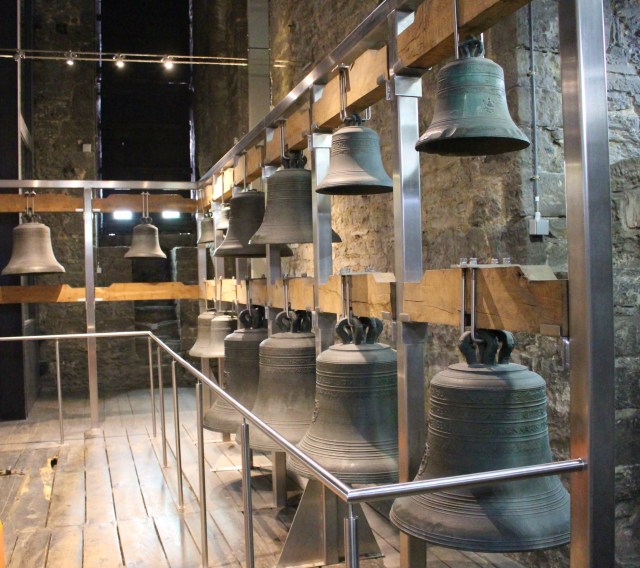
Like the famous Bruges Belfry, Ghent has its own Belfry too. What’s cool about the one in Ghent is that it has an elevator to take you up to the top so you don’t have to struggle like poor Ken (from the movie ‘In Bruges’) to climb up those winding stairs like you’d have to in Bruges. You can also get off the elevator at each level to check out their awesome bell collection and take a look at the intricate workings of the bell tower.
The first level is the secrecy room which as the name suggests served as a hiding ground for valuable records which were kept in heavy, chained trunks. This place also served as a hideout for some of the Germans during WW II.
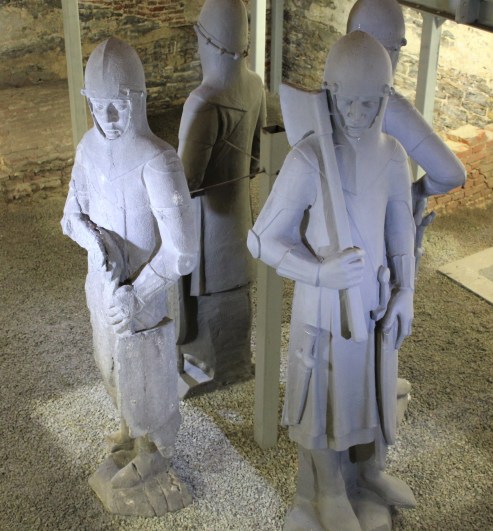
The Keepers of the Belfort, guarding the tower since 1339
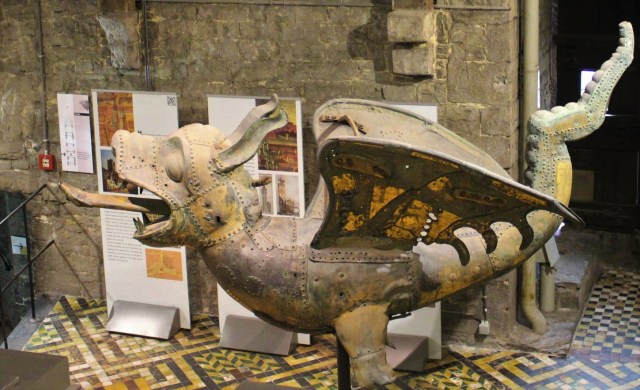
The construction of the Belfry is said to have started in 1313 and finished in 1380, when the first dragon was placed atop the tower. A few centuries later, the dragon was made to spit fire during big events – ah, this would have been a pretty cool spectacle. Many a dragon went on the tower and were brought down weather-beaten. You’ll find one of these former dragons at the second level.
Dragon in action at the Belfry, Gent
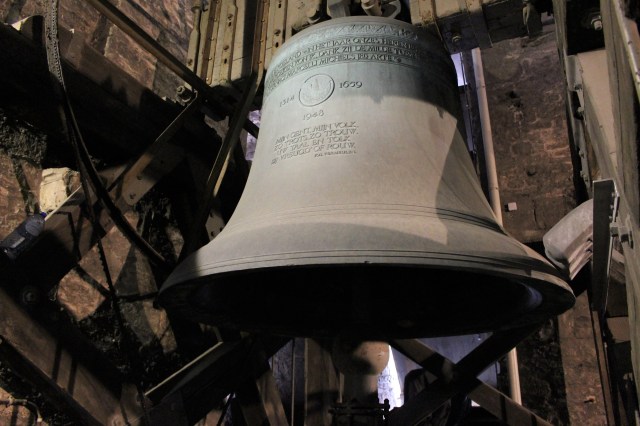
Also, at the second level is the Roland bell – the rockstar bell of the Ghent Belfry, which was installed originally as an alarm bell and then became an hourly bell. This bell kept the show going until the carillon (a musical instrument comprising of multiple bells to produce a melody) was built in the 17th century. The original Roland was melted to be used as bell metal for the new carillon. A new Roland came about soon after.
This is the third Roland from 1948 weighing 6200 kilograms!
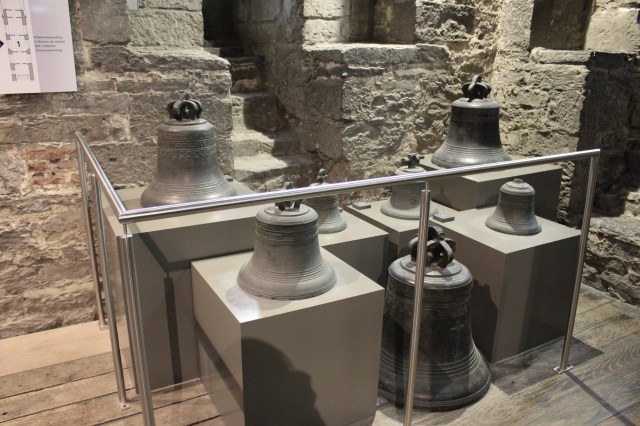
In the next level, you’ll find many of the older bells of the Belfry – they range from little bells to massive heavy-lifters.
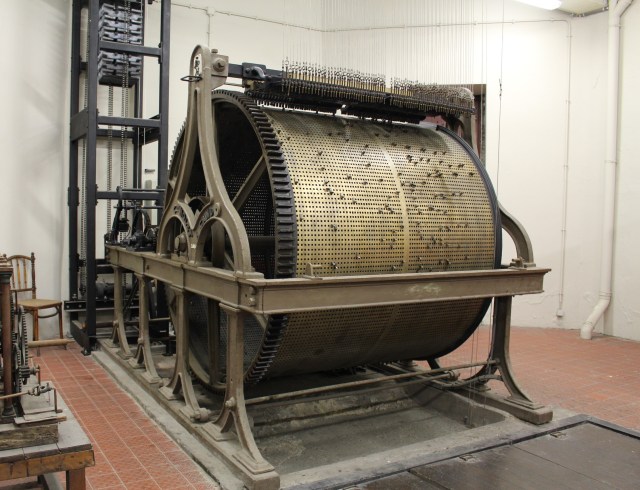
In the same level, just a few steps higher, you will find this antique music box with 17600 holes in it!!
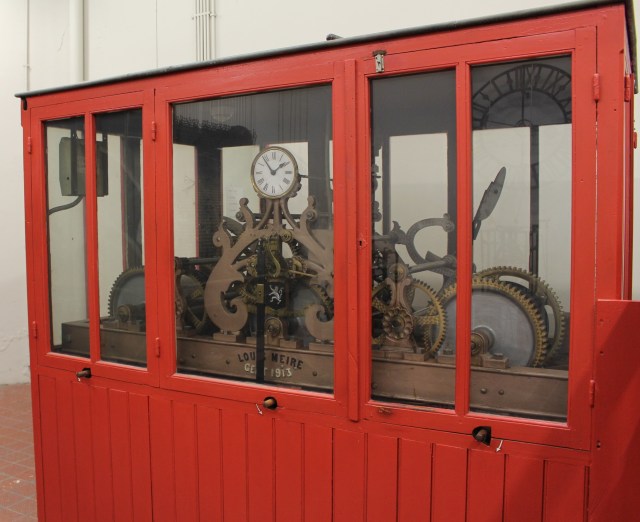
This copper drum dates back to 1659 and is still being used today to play 54 bellsThe parent clockwork which is connected to the drum and moves it every 15 minutes
The bells sound for about 5 minutes and the entire mechanism is fascinating to watch. You can go up one more level to the see the actual bell room with all the 54 bells in action with the hammers pounding on them as the levers attached to the drum below are moving. It’s quite a riveting show! The Belfry not only served as a bell tower to announce the time and issue warnings of imminent danger but also served as a watchtower keeping an eye out for approaching enemies and offering some great views of the city.
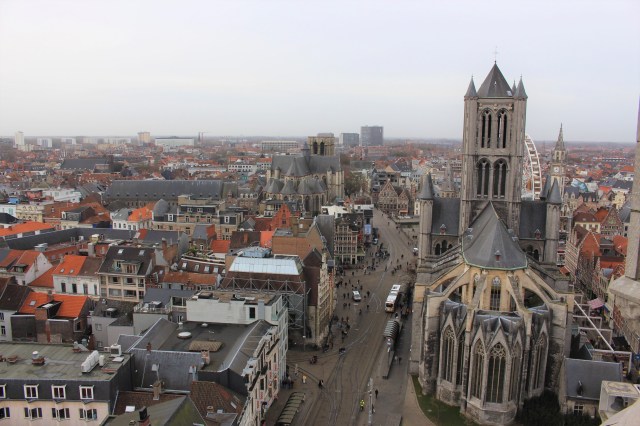
The St. Nicholas Church fills up the viewGent city view from the Belfry
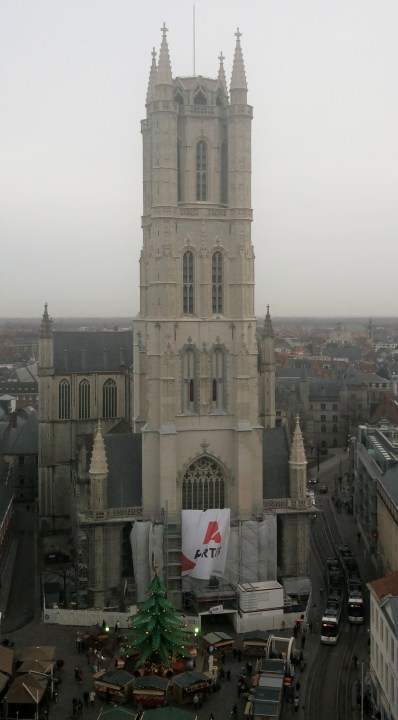
We then headed on to the St Bavo’s Cathedral or Sint-Baafs Cathedral.
View of St.Bavo’s Cathedral from the Belfry
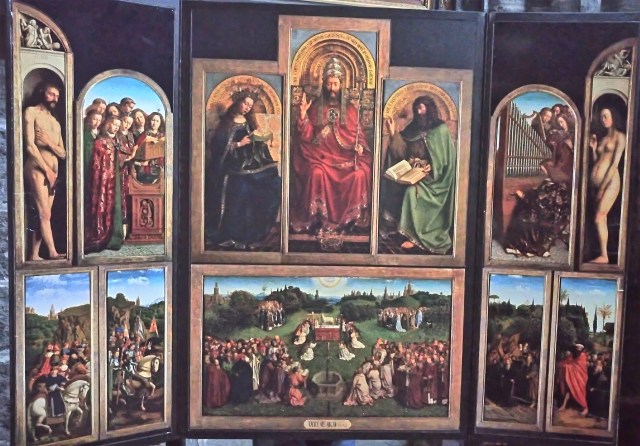
The cathedral is most renowned for its 15th century altarpiece – the Adoration of the Mystic Lamb– a masterpiece from the Van Eyck brothers. It’s amazing that the painting survived all those fires, wars, and thefts and it felt wonderful to be able to admire this brilliant piece of work. The piece has 12 front panels and each of them has a religious significance. The painting is a polyptych and has a beautiful closed view of the back panelsas well. You cannot take any pictures of the original piece however you will find a smaller copy further down the cathedral.
A smaller copy of the Adoration of the Mystic Lamb
The interiors of the gothic cathedral are were quite impressive as well displaying other art works including one of Peter Paul Rubens. We had seen some of his stunning work already in Antwerp and he definitely seemed to be revered in the Flemish region.
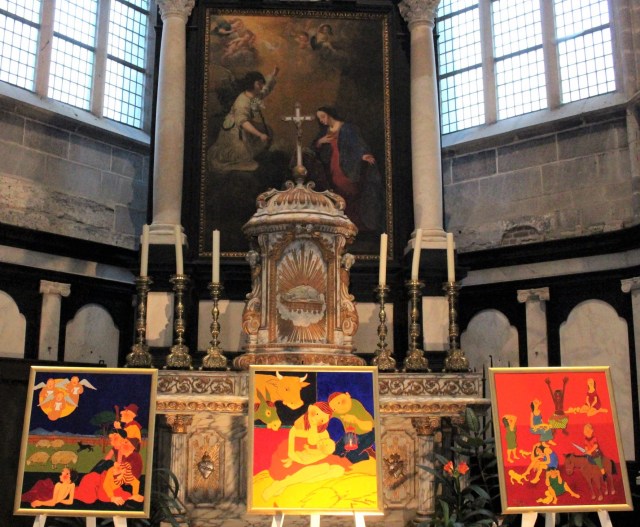
A unique, modern representation of the birth of Christ
Now all this excitement had gotten us very thirsty and it was time to make a beer-stop. The Christmas market was still open and in spite of it being the eve of Christmas, both locals and tourists flocked the stalls.
La Chouffe Golden Ale
Straffe Hendrik Quadrupel
Boy, were we pleased to see the beers in the Christmas market! Only in Belgium did we find awesome beer in the Christmas markets. It was so good to drink La Chouffe on tap. So fresh and bursting with flavor! And since it is so close to Bruges, we had some of the local Brugge beers too. We had still not visited Bruges – we’d been saving the best of Belgium for the last.. and we knew we just had to get there soon. Steve had visited Bruges before; he’d had the beers and had already set high expectations for me and I was pleased with the little I’d had in Gent. Gent has some lovely local breweries and beer bars.. we had time to visit just one as most of them were either closed or soon closing. Luckily the Het Waterhuis aan de Bierkant was still open but just for a bit. It’s located right in the city centre with the backdrop of the canals for a view and has a great collection of Belgian brews. Being Christmas eve and all, they were shutting down early and we had time for just one beer. If you do have time, you should also check out the t’Dreupelkot which is located right next door and the Gruut Brewery (these guys brew their beers with herbs instead of hops and being hop lovers, this one majorly piqued our curiosity but we have to wait for our next trip to Ghent to explore this one).
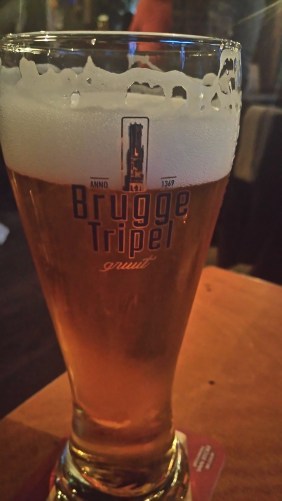
Yet another beer from Bruges – this one was a decent tripel
We spent the next hour or so just walking around the city, taking in its beauty and indulging in some local bites.
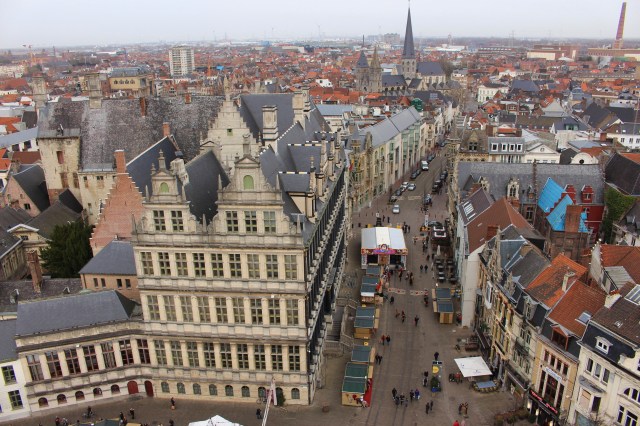
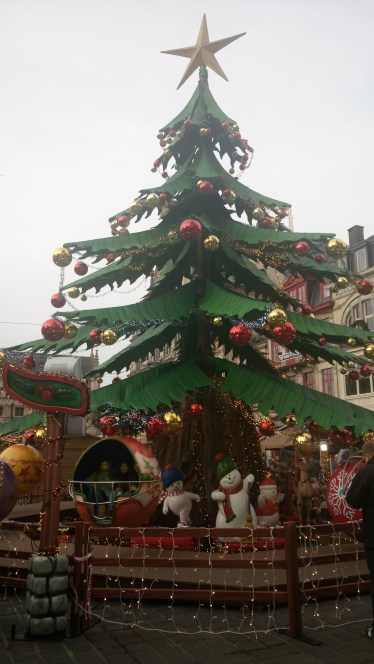
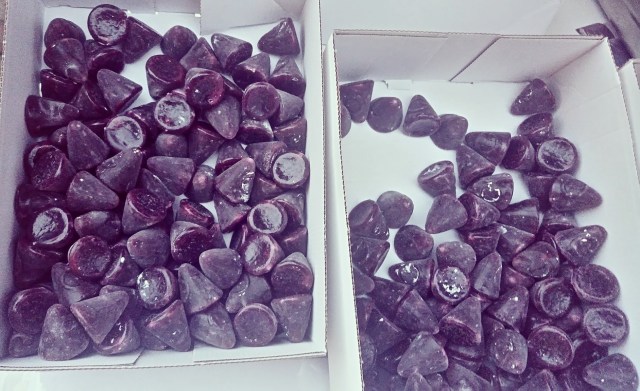
Looked like a fun ride – it went all the way up to the top of the tree – too bad it was only for kids 🙂View of the St. Nicholas Church, Belfry, and St. Bavos Cathedral from the St. Michael’s BridgeThe purple noses of Ghent or the Gentse neus – these Belgian cone-shaped candies filled with raspberry liquid are simply delicious!
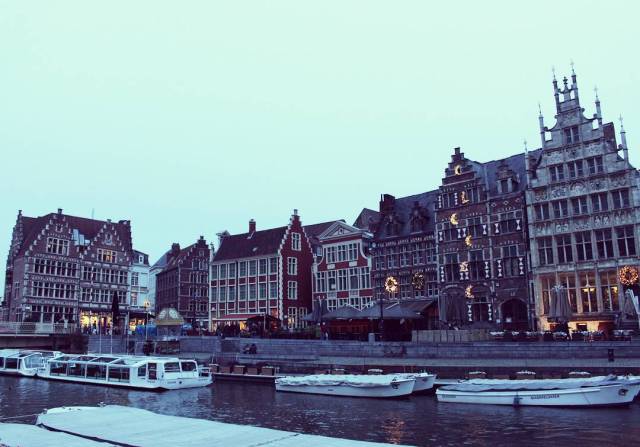
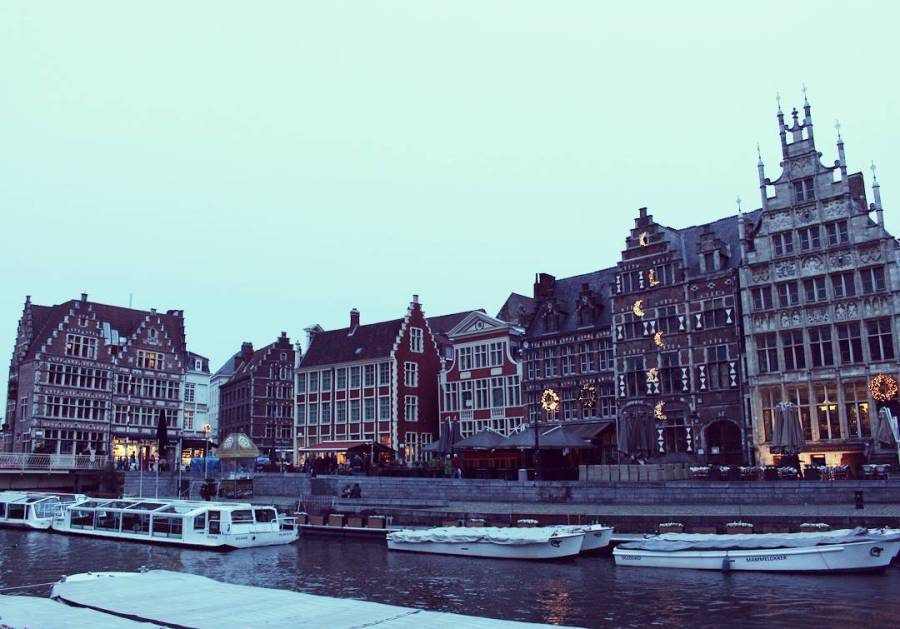
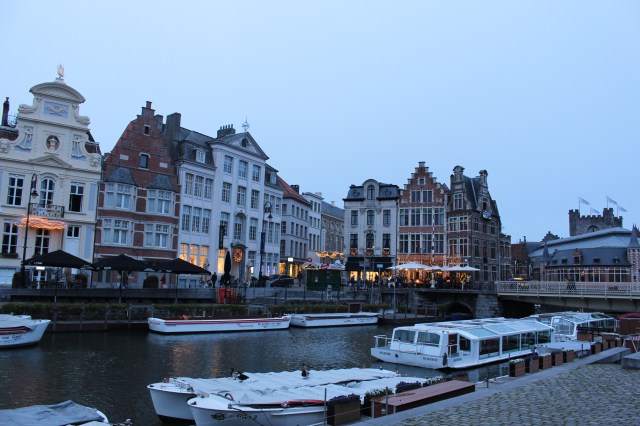
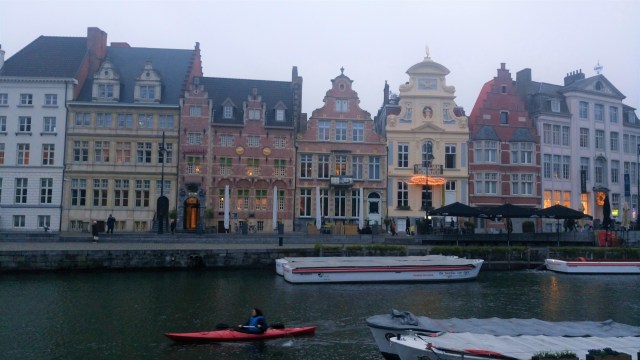
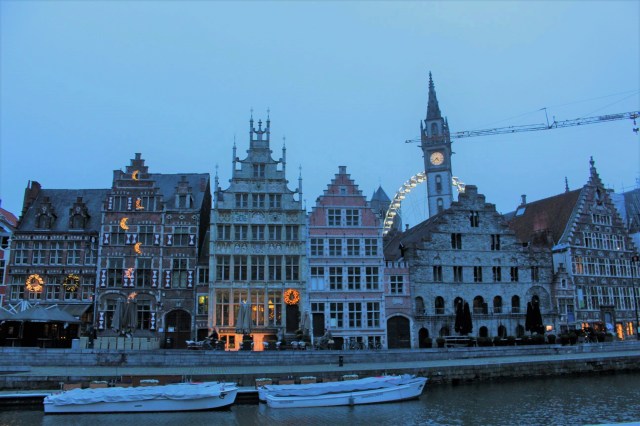
Our final stop was the Graslei and Korenlei. This was the most loved and popular spot in Ghent. With its historical buildings, quaint little cafes, and people kayaking down the Leie river – Graslei and Korenlei have a delightful rustic, romantic charm to it.
A view of the KorenleiGraslei view as dusk approaches
Some of the buildings in the Graslei date back several centuries and have been heavily renovated over the years. This place would surely be a different scene in summer – sprawling with people on the riverbanks.
We look forward to going back to Ghent in summer. We just could not get enough of this charming little city – a day is just too short a time to explore this incredible, historic Belgian city.
And, yet, sometimes in just a day, you experience so much beauty that you are filled with a deep sense of gratitude and contentment for all that life brings your way.
A beautiful city in Belgium with gorgeous medieval buildings, a large port, a great sense of fashion, a diamond market, and an outstanding art scene.
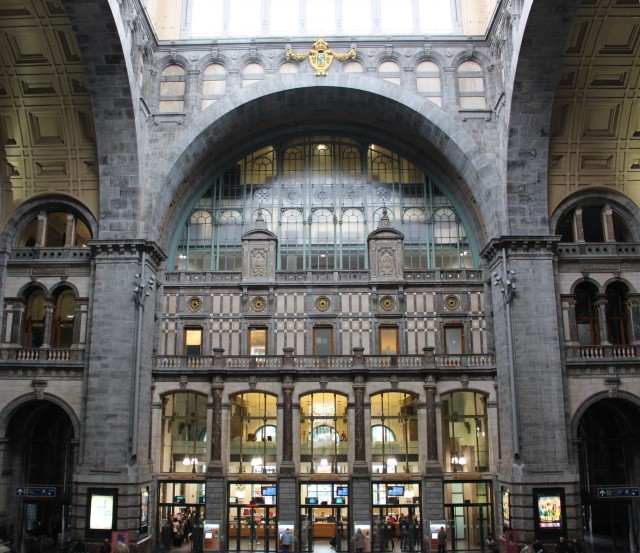
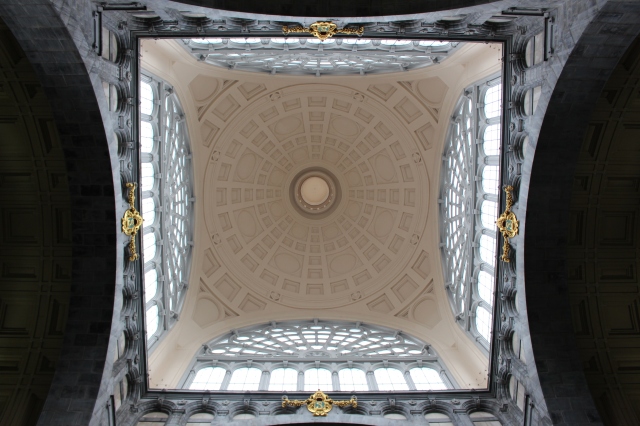
You are hit with the architectural wonder of the city right from the minute you arrive at their central train station. They definitely have one of the prettiest train stations. You can see trains arriving/departing at 3 levels. It’s a beautiful big train station.
Antwerp central stationThe train station is an architectural marvel
As soon as you step outside the central station, you can see several diamond stores. Antwerp is known for its diamond market and apparently more than 70% of the world’s diamonds are traded here!
We had just a few hours in Antwerp and wanted to make the most of our short time and decided to just walk up to the city’s main square. We walked past a whole bunch of cyclists – definitely more of them here compared to Brussels and Bruges. We passed by medieval buildings that were an architectural delight! We walked past numerous stores of the big brands Gucci, Armani, Prada etc. – Antwerp is quite a fashionable city!
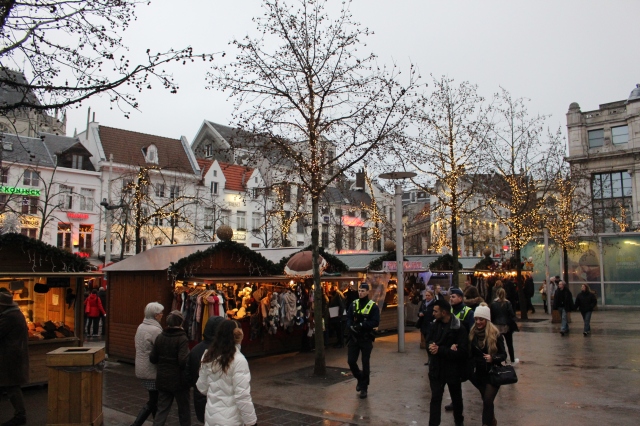
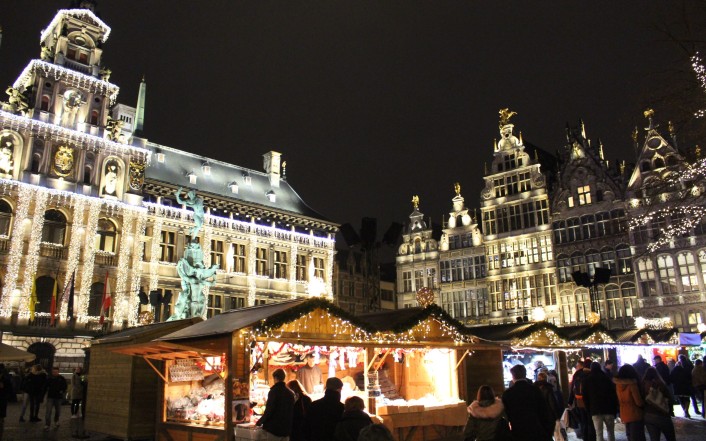
In just a few minutes, we were in the centre of the town where they had the Christmas Market – the stalls displayed a great variety of well-crafted artefacts unlike the Brussels market.
At De Veemarkt; used to be a cattle market
Since we got to Antwerp somewhat late and well into the lunch hour, we had to stop for some grub and beer first.
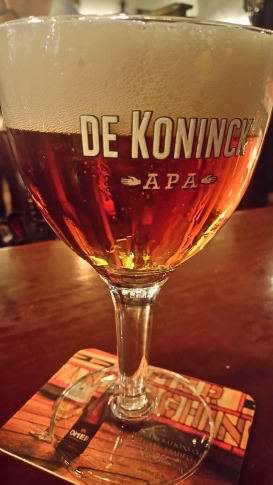
Unfortunately, the Kulminator which is one of the highly recommended beer spots was closed the day we were visiting. We settled for the next best thing. They had a nice selection of restaurants just behind the Christmas market and we found a cosy one with a good selection of beers. The city’s most famous brew is the De Koninck, locally known as ‘bolleke’. While it was not one of our favorite Belgian brews, it quenched our thirst. Their other popular beer is the Seef Bier, a pale ale – liked this one better.
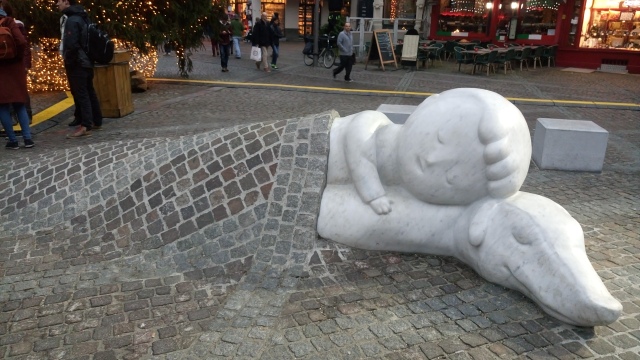
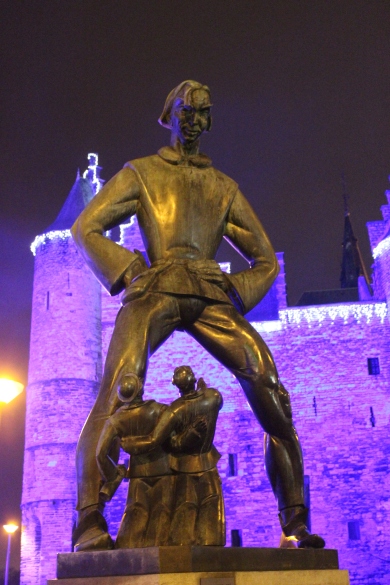
Post lunch, we walked around the city centre just exploring the place. Antwerp is filled with some creative, interesting monuments – you should especially check out Sleeping Nello and Lange Wapper.
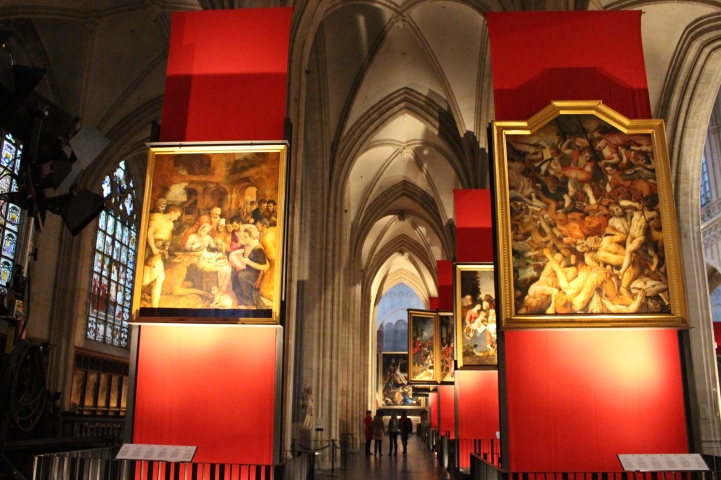
One of the main attractions of Antwerp is the Cathedral of Our Lady (Onze Lieve Vrouwkathedraal). It is said to be one of the largest gothic cathedrals in Benelux. The cathedral is most renowned for its display of Peter Paul Rubens’ masterpieces. It also includes the works of some other well-known Flemish painters. It is a huge cathedral and a giant, mesmerizing art gallery.
Cathedral of our Lady featuring Ruben’s paintings
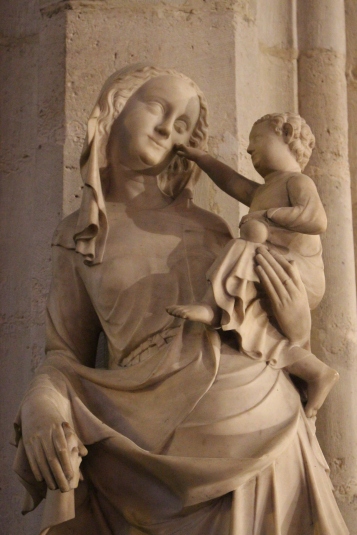
One of the first things you notice as you walk in is this amazing 14th century marble sculpture of Madonna and Child(Virgin Mary and Baby Jesus). The gentle gesture of the child and the mother’s smile as she looks upon her child affectionately just warms your heart. There’s no greater bond than the one between a mother and her child!
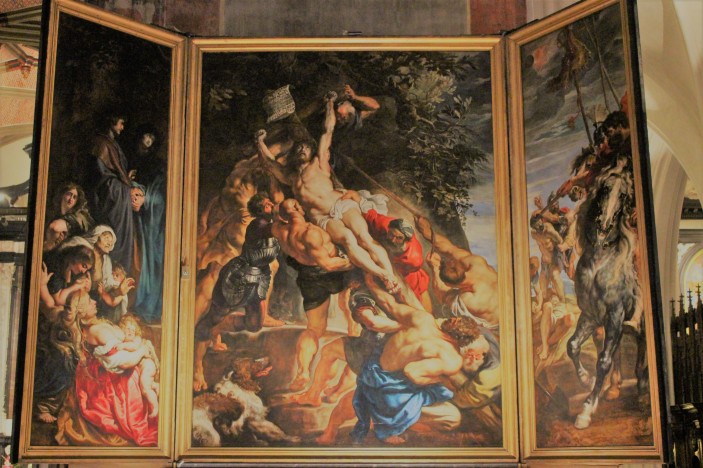
We continued to be spell-bound as we walked on admiring Ruben’s paintings. Most of his works are altarpieces and a reflection of famous scenes from The Bible. Ruben’s masterpieces ‘The Descent from the Cross’ and ‘The Raising of the Cross’are simply mind-blowing. You can stare at it for hours.
The Rising of the Cross – by Ruben
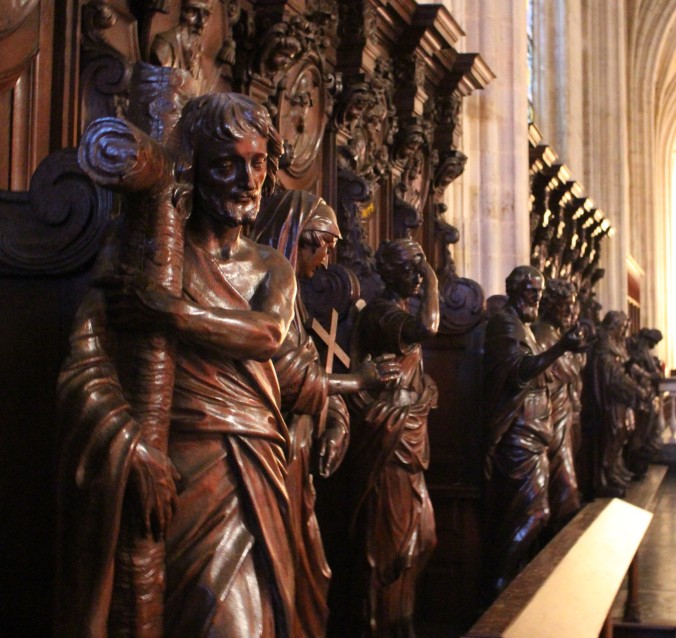
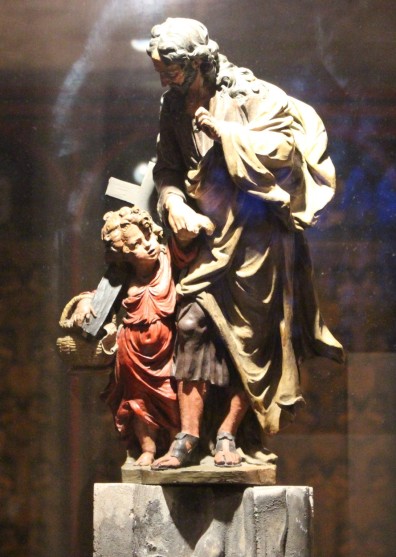
While the exterior of the church is gothic style, the interiors are filled with Ruben’s baroque art. Although the artwork is definitely the main attraction, the cathedral itself is quite spectacular with its carved woodwork and sculptures.
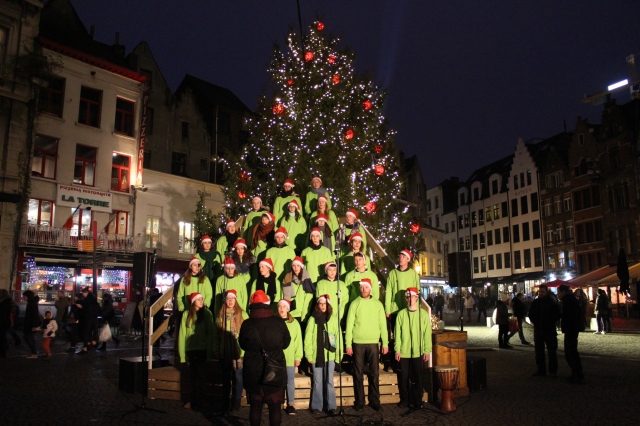
We were the last ones to leave the church – we had completely lost track of time in here. As we were getting out of the church, we heard beautiful music. Intrigued, we walked out to see a choir full of youngsters. They were such a talented bunch, singing some really high-pitched phenomenal melodies.
It was just a day before Christmas Eve and the place looked so festive!
Grote Markt
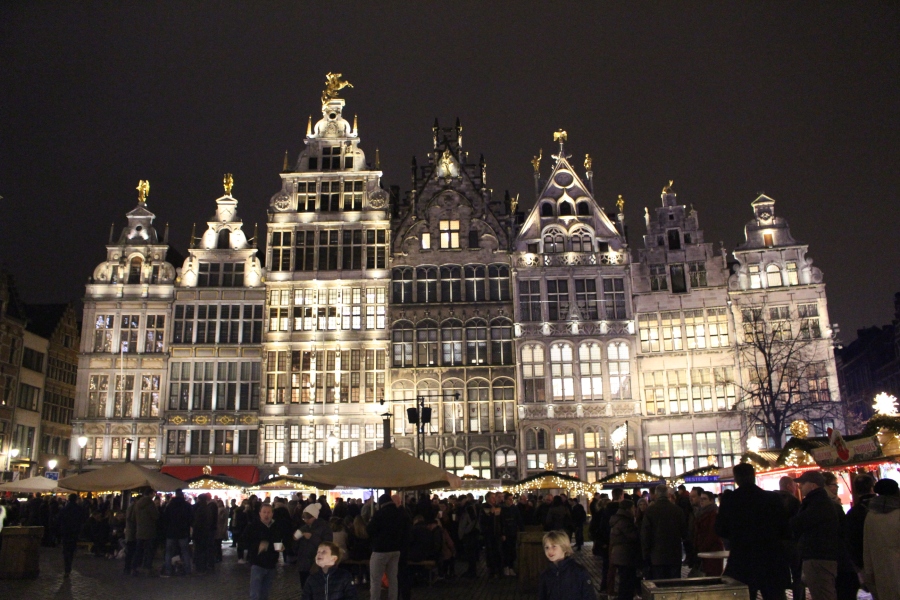
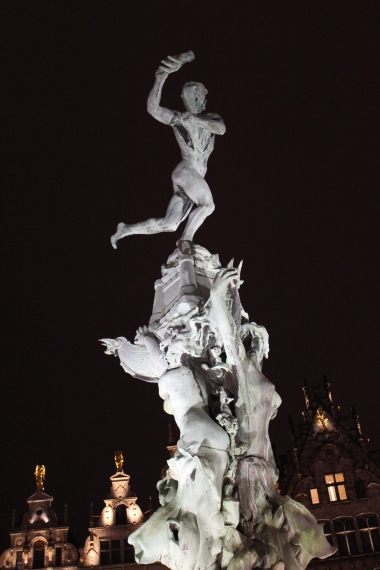
We strolled around the Grote Markt or Groenplaats, the city’s main square. The square is filled with ornate guildhalls similar to that of the Brussels’ Grote Market (or the Grand Place). Also adorning the Grote Markt is the city’s Stadthuis (town hall) and the Brabo Fountain.
Brabo’s Fountain, Grote Markt
This sculpture of Antwerp’s hero, Brabo, depicts him flinging a severed hand.The legend goes like this – There used to be a giant called Antigoon who used to take a toll from those who crossed the Antwerp river, Schledt. And, he cut off the hands of those who refused to pay. So, Brabo cut off the giant’s own hand and flung it into the river. And, that’s how the city got its name Antwerpen – meaning hand werpen or hand throw or throwing hand(s).
Antwerp definitely had the best Christmas Markets we’d seen in Belgium. It had stalls all around the centre of the city and some near the port as well. There was a huge ferris wheel and ice skating which seemed to be a trend in Belgium and Netherlands. The ferris wheel ride was so much fun. I hadn’t been on one in years and the views from up there was lovely.
Antwerp is also well-known for its jazz clubs and we were a bit disappointed that we couldn’t catch the jazz band in action at De Muze, a hotspot for great jazz music in town. The last train back to Brussels was at 11 ish PM and the band doesn’t start until after 10.
There’s so much to do in this beautiful Belgian city and we know we’ll head back there someday and stay a few nights.
Despite being bigger, fashionable and modern compared to the other medieval cities of Belgium, Antwerp has a charm of its own with its amazing collection of art, cobblestoned lanes, riverside castle and splendid jazz culture.
Brussels was our first stop on our Belgium beercation. Steve visited Belgium years ago and we had been looking forward to doing Belgium together for a while now and we were so kicked to finally visit Belgium over the Christmas holidays last year.
My first impression of Brussels, just seeing what was in plain sight, was like.. Whoa, wait, why do some of the buildings look so rundown and covered with soot!? Why do the metros and the metro stations look so ancient? Why is that guy peeing in the street, that too in the centre of the town!? [And, no, I don’t refer to the infamous statue of the little boy peeing]. It took me a while to warm up to Brussels and appreciate the city for what it is. The beer (uh… beers) helped. Brussels has tons of breweries, brew-pubs, bars, beer stores — there’s just loads of good beer everywhere. In Belgium, beer is not just a drink, it is a culture.. and, it has sacred origins!
[More on our beer pilgrimage in Belgium coming soon in a separate post but here’s a peek!]
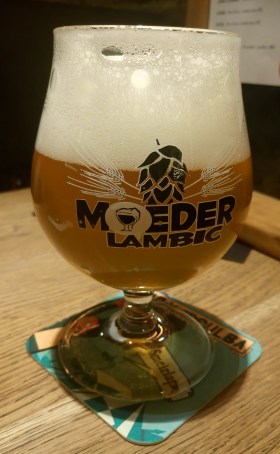
Best place in town to get some of the best Belgian ales on tap
There’s a lot to do in Brussels. A good place to start is definitely the city’s main square – la Grand Place (French) or de Grote Markt (Dutch). Yep, they have two names for everything including street names. And this can get confusing and you’ll wonder if it’s two different places as they are usually totally different. The city is bilingual and both French and Dutch are official languages. French though is the dominant language and you will hear it everywhere. It’s interesting to note that the city’s origins were that of Dutch and it has been more of a French speaking nation only since the 19th century (the French revolution of course).
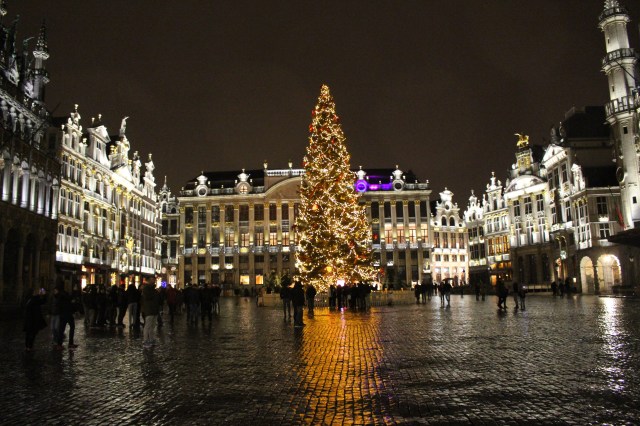
De Grote Markt / la Grand Place / City Centre
The Grand Place was packed with lots of people, every time we passed thru. This picture was taken at 2 AM. Well, it was Christmas time and there were tons of tourists, like us. And, through the evening, they had this light and music show happening which had the crowd flocked to it like bees. The light show was alright, a bit too bright and way too colorful for our liking. And the music, well, may be some Belgian folk music or Christmas carols or anything other than electronica might have made the whole experience (being in a historic city, watching a light show on historic buildings etc.) more relatable.
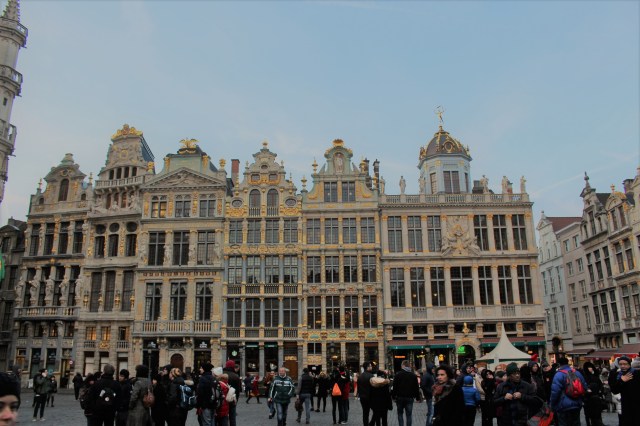
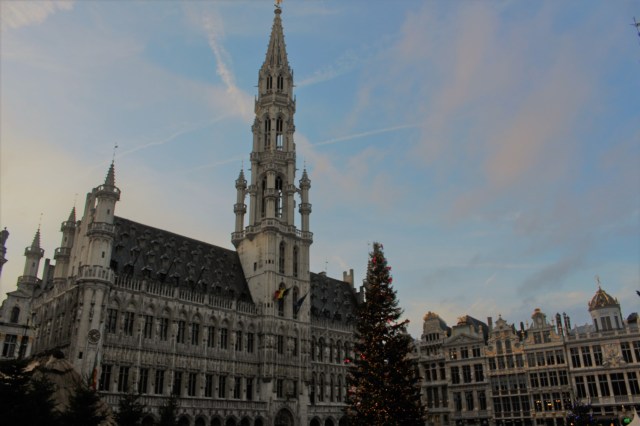
The Grand Place is surrounded by ornate guildhalls, the Stadthuis (the Town Hall), and the Broodhuis (Breadhouse or the Museum of the city of Brussels). Most of these buildings including the town hall date back to the 15th century although the Grand Place itself dates back to early 12th century. The buildings here an architectural delight with their gothic and baroque styles. The ornamental guildhalls are especially remarkable and at night, even more so with a beautiful glow. There’s always something or the other happening at the Grand Place. It seems like the bi-annual flower carpet show that takes place in the Grand Place is one of their most popular events.
Some of the ornate buildings at the Grand PlaceThe Stadthuis (the town hall)
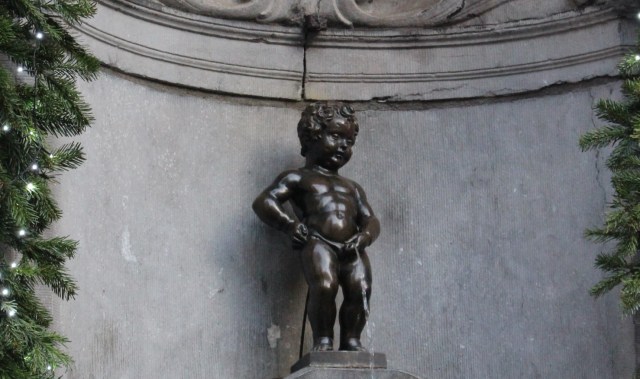
Just a few blocks away from the Grand Place is the infamous Manneken Pis (translates to Little Man Pee), popularly known as Peeing Boy. This small bronze sculpture of the naked peeing boy is a huge deal in Brussels and is a national symbol.
Brussels’ oldest citizen
He is apparently seen in a variety of outfits from Santa suits to Elvis Presley to Tibetan monks to national costumes of other countries. What amused us the most though was that for some special occasions, he would be hooked up to beer kegs and you can have a sip of Belgian’s famous brews from his truly. 😀 There are many stories around the origins of the statue – check these out here. And, the boy has a sister and a dog doing exactly what he seems to enjoy doing. We didn’t check out the Jeanneke Pis and Zinneke Pis – decided to save some of this amusement for another trip to Brussels.
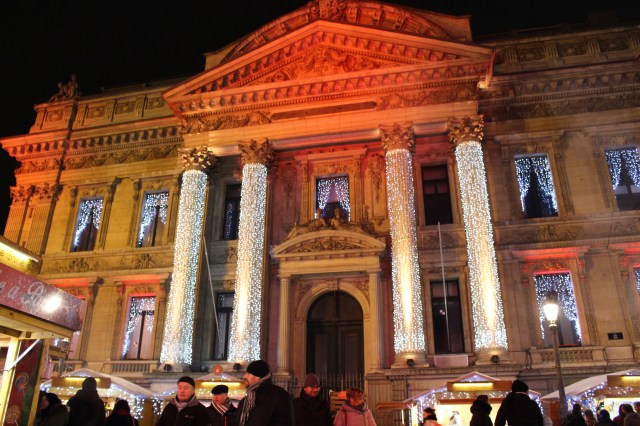
Brussels as well had a Christmas Market, just a few meters away from the Grand Place – nothing nearly as beautiful and festive as the German Christmas Markets but nice nonetheless.
They had a whole bunch of stalls selling handcrafted wares, woolen wear, Glühwein, and local Belgian food (loads of waffles and fries of course). And, surprisingly also had stalls selling other cuisines like Mediterranean, Turkish, and Asian. Definitely catering to the multi-cultural city that Brussels is. What we liked more about the Brussels and the other Belgian Christmas markets we saw were the beer stalls – we were especially thrilled to see a craft beer stall with a great collection of craft beers and some of the traditional Belgian beers.
The best way to discover Brussels is to just walk around the city. You will see sections with historic buildings and sections with high-rise offices. It’s a big city that looks so different at almost every turn in the road. AND, it has some super cool comic strip murals on a lot of its walls. The Comic Strip Route features over 50 paintings and is such a unique, fun way to discover Brussels. Check out this link for a map of the spots to hit.
Belgium is not just known for its beer, chocolates, waffles and fries. It’s also revered around the world for being the pioneers in the world of comics. Some of the world’s most beloved comics Herge’s Tintin and Peyo’s Smurfs have hailed from this beautiful country.
Our next stop was the Comic Book Museum. The museum features a permanent exhibition on the history and the making of comics. And of course there is separate section reserved for Belgium’s much-loved hero Tintin. Not only does the museum feature a whole bunch of Belgian comics but also comics in other languages. You can also read some of these comics in the museum’s reading room. And if you cannot read them all, there are numerous comic book stores throughout Brussels and other parts of Belgium. We bought a bunch in Brussels and a few more in Bruges (the ‘De Striep’ store in Bruges has a great collection of comics including in English).
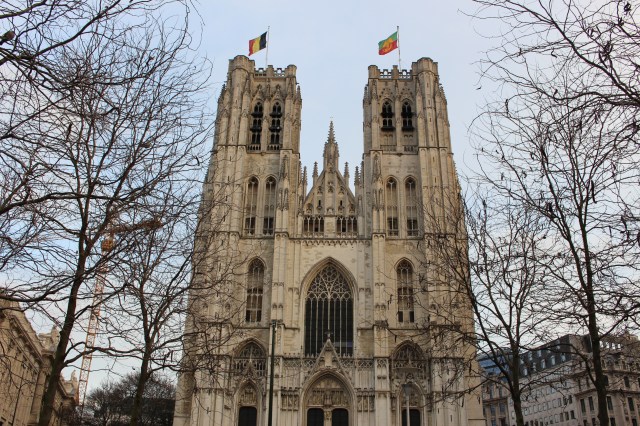
Brussels has quite a few lovely churches but we had time to visit just the Cathedral of St. Michael and St. Gudula. This gothic cathedral’s history is believed to date back to as early as the 9th century.
Cathedral of St. Michael and St. Gudula
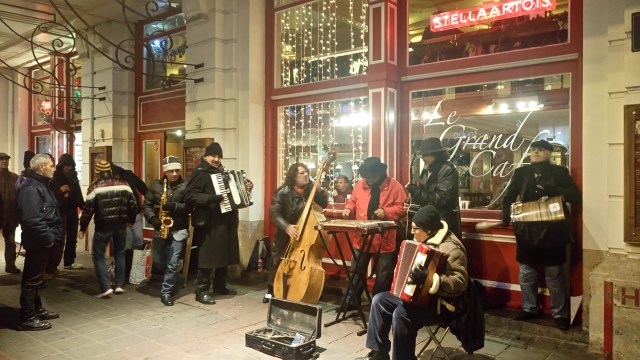
We spent most of our time in Brussels just walking around, enjoying the street art and the wonderful street music, hopping from one beer bar to another, indulging in the local delicacies, and picking a few comic books along the way.
These guys got the crowd grooving to their music instantly – streets in Brussels are such fun!
Brussels is lively, quirky, medieval yet hip, run-down yet rich with history … And, most impressively, standing tall and strong despite all the tough times the city has had to endure in the recent past. In the end, I fell in love with all of its uniqueness and rich culture and will surely go back for more.
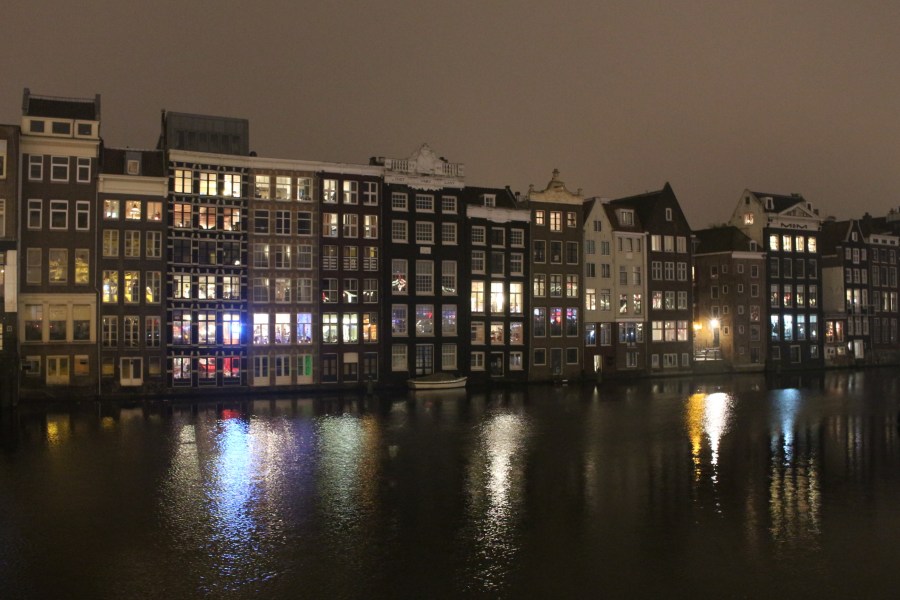
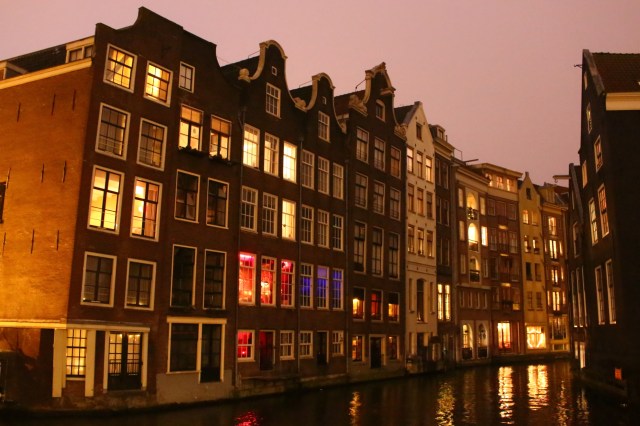
Amsterdam is full of energy, always bustling with activity, and packed with a stream of tourists in all seasons all days. It’s also a beautiful canal city — numerous canals everywhere even in the heart of the city.
Damrak canal, centre of Amsterdam
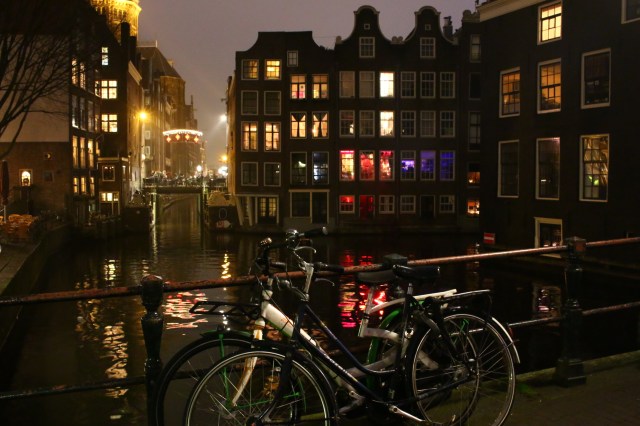
It’s also a city with the most number of cycles I have ever seen. 800,000 bicycles — almost as many bikes as people in the city!! It’s such a pleasant sight – to see families riding their bikes together, chatting away and the elderly riding with so much ease and stopping for passersby. They seem to ride their bikes no matter the weather and there are so many parking spots for these bikes (including a floating parking spot bang opposite the train station, next to the ferry point). In some places, there are no footpaths but there is a bike lane! Apparently, bikes go missing quite often. Some stolen and some if you look hard into the canals, you might find a bike or two submerged in the water!
a bike-friendly city
Apart from their bikes and canals, Amsterdam is likely more well-known for its red light district and its “coffeeshops“. There’s plenty of these “feel good” shops all around the central area and this is where the local crowd and the weed-starved citizens of other nations throng to. Cannabis is sold in all forms – of course there’s the traditional by gram and the joints but there’s also the brownies, the cookies, the chocolate bars and the lollipops! It is sold in an insane variety of forms. Although it is illegal to smoke in public, you’ll smell the marijuana everywhere and you’ll see lots of stoned people especially youthful tourists.
The whole culture and legality around this and prostitution in Amsterdam still amazes me. While the rest of the world is only now opening their legal doors to marijuana, this city had been the only paradise on earth for decades for peeps hankering after the green stuff. What I admire the most is – the city has a very open, bold, live and let-live attitude. The Dutch folks are also very warm, friendly people. And, they also seem to have a great tolerance for people from other ethnicities – Amsterdam is swarming with people from all countries.
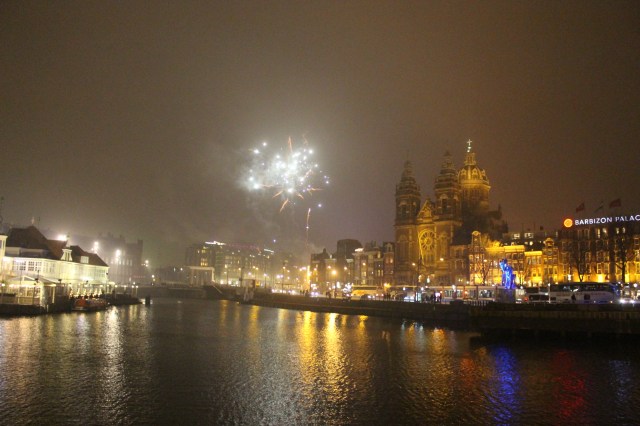
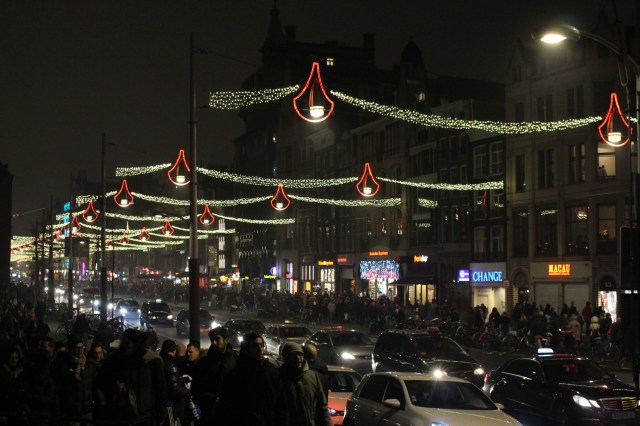
We visited Amsterdam over our Christmas holidays and spent New Year’s eve here. There were decorations everywhere and the light festival was on — the city looked pretty spectacular.
just a teeny weeny start to the fireworks that would take over the sky
If you do visit the city over New Year’s eve, you should note that the city shuts off its train system, all public transport really from as early as 8 PM on the 31st and it doesn’t kick back in until 6 am. There are a few night buses but I’d say nearly impossible to make these with all the connections and likely all the crowd trying to get on these. So be warned! 🙂
people, people everywhere
Amsterdam is so so packed, always. Of course, there were a lot more tourists because of the Christmas holidays and New Year’s eve but Amsterdam is one of those big cities that is always brimming with tourists and there’s always long lines everywhere, so planning well in advance saves you wasted time.
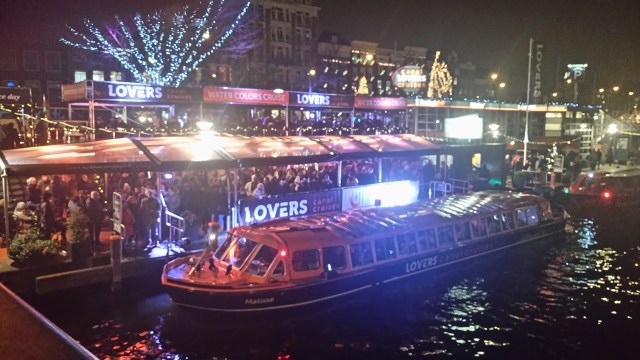
If you are in Amsterdam, you should go on a canal ride. They have all types of boats – we opted for the warm, closed one as the temperatures were terribly low during new year’s eve. We did the water colors evening cruise that was part of the Amsterdam Light Festival(usually takes places from Dec to Jan). The queues were long, extending to more than a kilometer.. but the wait wasn’t so dreadful as we had a DJ entertaining us – people were dancing on the streets, kids and old folks alike. The new year cheer was definitely in the air! It was a pleasant ride cruising thru the waters admiring the light artworks along the way. Some were quite impressive but I think I still have a soft spot for the Singapore night festival which is a somewhat similar display of art thru light (the festival includes lots of other fun events and is an amazing experience). What made the canal ride in Amsterdam fun was our boat driver (who was also our tour guide) and who like a lot of Dutch folks, had a great sense of humor. He cracked us up with witty, cheeky and some cheesy jokes about the local folks, culture and customs.
boats of Amsterdam
A visit to Amsterdam cannot be complete until you have visited some of the city’s brilliant museums– the Van Gogh Museum, Rijksmuseum and the Anne Frank Houseare a must-visit. The works of Van Gogh, Rembrandt, Vermeer, Van Dyck, and other Dutch artists are not only held in great reverence by the Dutch folks but by folks all around the world. The Dutch have produced more than a few exceptional masterpieces in the art world. We unfortunately were able to visit just the Van Gogh museum — Van Gogh and his works left us feeling pensive and simply awestruck. Visiting the museum gives you a chance not just to see his popular works, but also gives you a glimpse into some of his early, lesser-known but equally powerful works. We would have loved to see the Rijksmuseum that displays the works of Rembrandt and Vermeer and also the Anne Frank House — we now have yet another compelling reason for us to visit the city again.
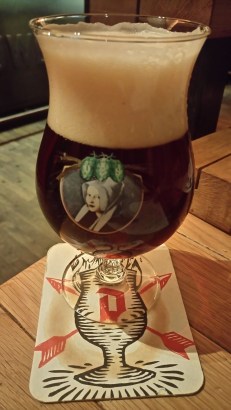
wonderful bock at the De Bekeerde Suster brewery
We’d also like to visit again to explore the city’s brewing scene. While we visited some fantastic breweries in our short stay there, there was a bunch we couldn’t do. There’s just not enough time to drink all the beer you want to!
We were pleasantly surprised that this land of Heineken could brew some neat craft beers. We visited the De Bekeerde Suster brewery – not only did they have a feisty collection of beers, they also had a great spread for the hungry stomach and a very interesting story behind their name!
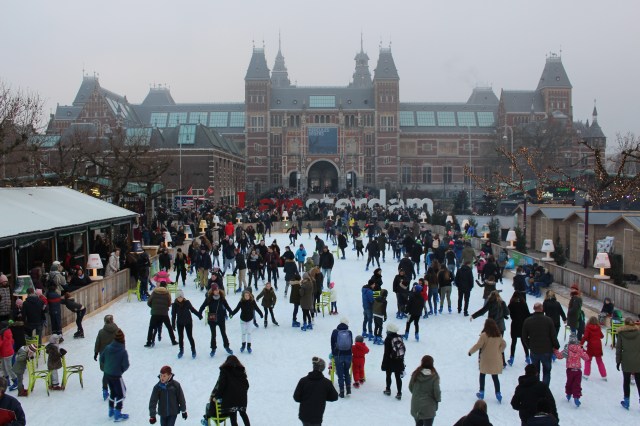
We were visiting Amsterdam after a couple of weeks in Belgium and were so glad to see their tourist centre (the I amsterdam centre). No wild goose chase trying to locate it, just visible in plain sight..like you’d expect. The city is well prepared and well set-up for tourists – so not too difficult finding your way around local transport and such. The I amsterdamis not only a tourist centre but possibly more well-known as a catch phrase with both locals and tourists alike. And, you’ll see the I amsterdam letters all around the city. The most popular one is the one right in front of the Rijksmuseum. In front of these letters is usually a small body of water which turns into an ice skating ring come winter. This spot is hugely popular and ridiculously crowded – as you can see in the pic below.. you can barely see the letters!
Rijksmuseum in the background – the most photographed place in Amsterdam
Amsterdam may appear like just another typical big city with throngs of people everywhere, busy streets, bad traffic etc. but it has an undeniable uniqueness to it. It’s a truly remarkable city – its rich culture, bold attitude, quirky traditions and pleasant folks — will leave you desiring for more.
Passau is one of those charming little German towns that fills you with an unbelievable sense of joy. We were in Passau for just a day but in this short stay, we made some beautiful memories especially because we explored the city with family whom we hadn’t seen in years.
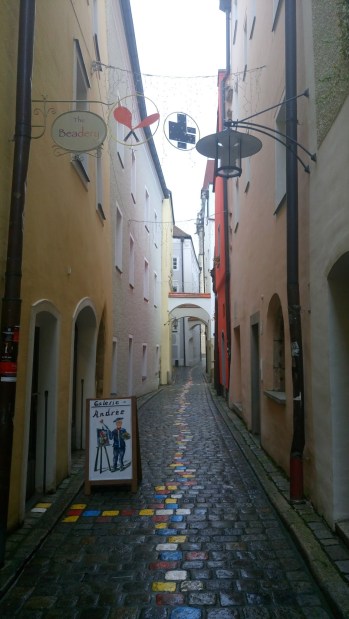
Artists’ Alley
Walking thru painted little cobble-stoned streets hand in hand on a cold autumn day, sipping some delicious Glühwein, admiring the lovely handcrafted wares in the little stores, visiting the most beautiful churches, walking by the river at dusk watching the boats sail away and the city light up, and of course hitting the local breweries is how we spent our short stay in Passau.
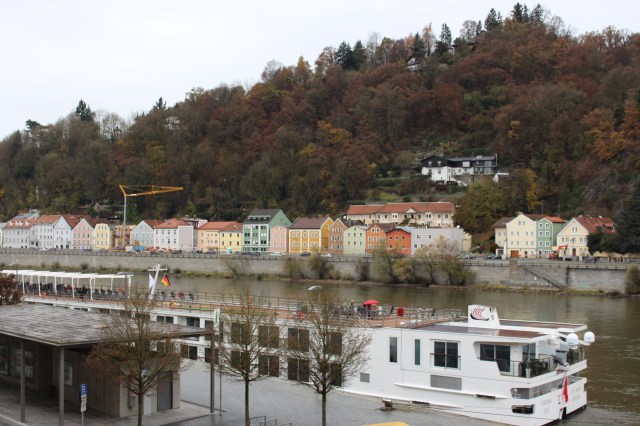
Passau is more commonly known as the city of three rivers, the Dreiflüssestadt. The Danube (second largest river in Germany) meets the Inn and the Ilz rivers at Passau. Each of the rivers appear to be in different colors in an aerial view – the Danube being blue, the Inn green, and the Ilz black-ish. The city is popular for its Danube river cruises and you will see a whole bunch of boats docked in the promenade. In fact, we were visiting Passau only to meet with family who was taking one of these river cruises which start here in Passau and go thru Austria and Eastern Europe. These boats look pretty neat and cosy on the inside!
The city is surrounded by lots and lots of water and you’ll find yourself walking by the river thru most of the city. Unfortunately, this also led to some really bad floods in the area. The worst one was over 500 years ago but then the recent one in 2013 was almost as bad. The flood levels are actually marked on one of the old town hall walls.
Most of the boats are docked at the Fritz Schäffer Promenade
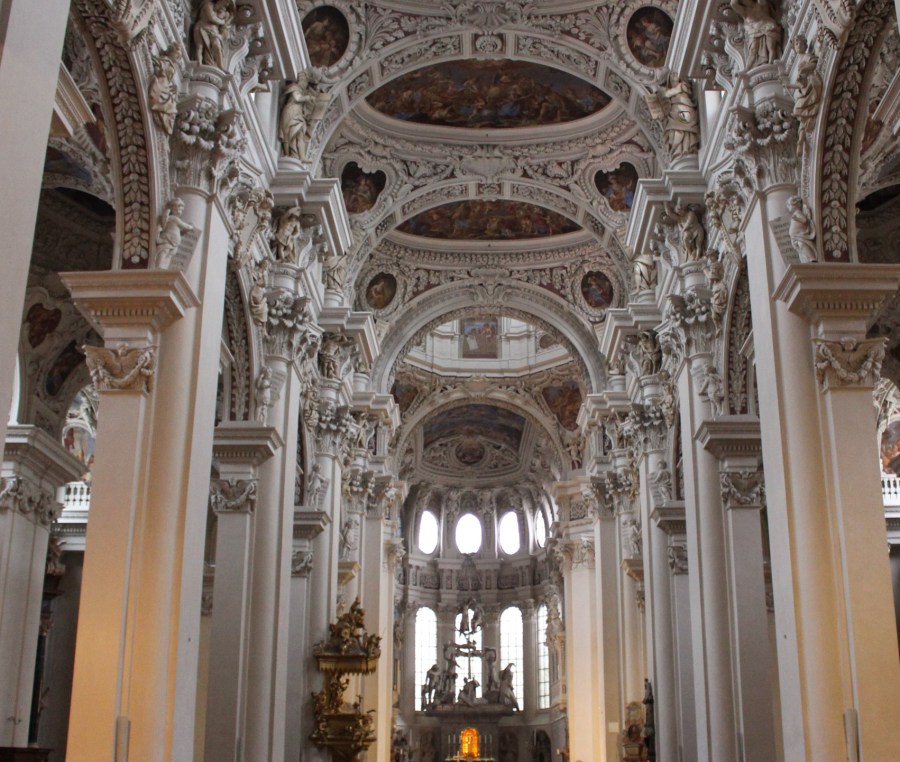
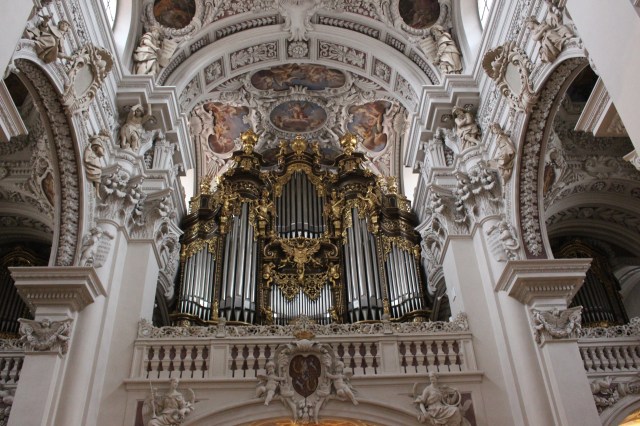
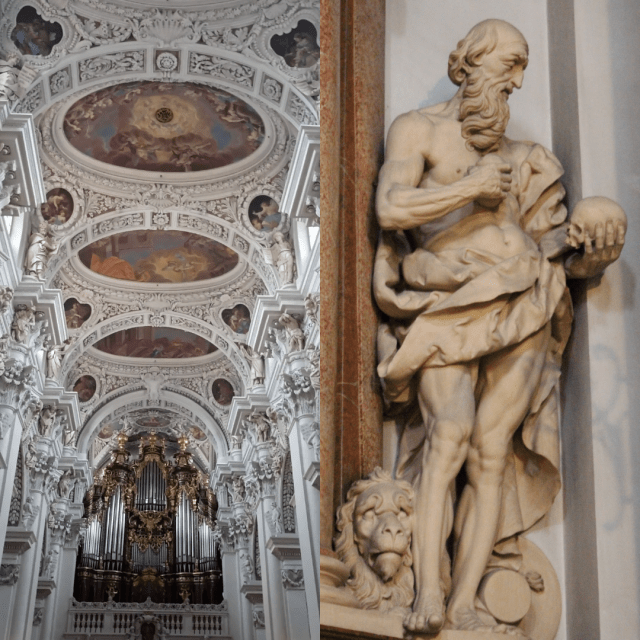
Apart from the rivers and its cruises, the city is also known for having the largest cathedral organ in the world. The St. Stephen’s Cathedralis one of the most beautiful churches in Germany and the huge pipe organ to its collection makes it all the more spectacular. It is said to have 17,774 pipes!!! Organ concerts take place in summer and we hope to attend one of these someday. The interior of the church is done up in baroque style and the paintings & sculptures are simply exquisite – some of them depict fairly morbid scenes and yet weirdly you feel at peace looking at them.
Organ at St.Stephen’s CathedralBaroque art at St. Stephan’s Cathedral
We were in Passau a couple of days before the Christmas Market and the stalls and decorations were still underway but we enjoyed some of their delicious Glühwein or mulled wine which is generally available during Christmas time.
Of course, we were eager to explore their local brews as well and were not disappointed despite it being your typical German brews. The dunkel (dark) lager we had at the Brauerei Hacklberg was pretty decent compared to the dark lagers we’d been drinking across most of Germany. The food at this brewery was phenomenal – one of the best meals I have eaten in my year-long stay in Germany. A visit to this brewery is definitely worth it.
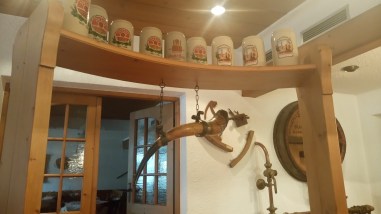
Ancient Battle Horn at the Peschl Terrasse
We also visited the Peschl Terrasse which serves the Aldersbach beer. We had the Aldersbacker Kloster Dunkel (dark lager) and the Aldersbacker Kloster Weisse Dunkel (dark wheat beer) and the dark wheat beer was quite nice.
We unfortunately could not visit the Aldersbacher brewery itself as it was quite a ride away from the city. The brewery was established in 13th century and had some bocks on its list and seemed to be into craft brewing as well. Something to do on our future visit to Passau along with a visit to a few of the other breweries in this little city.
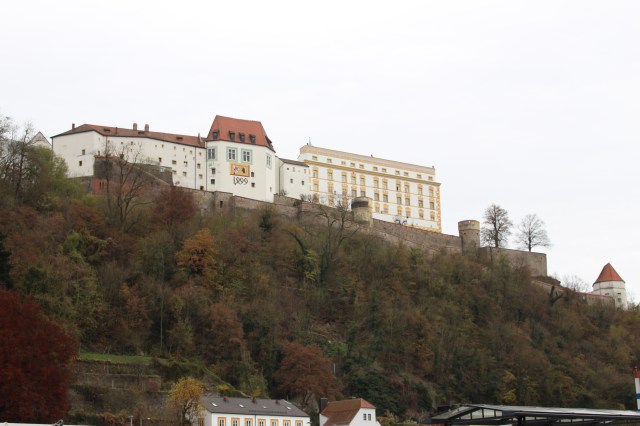
There’s a bunch of other things we couldn’t do like visit the Veste Oberhaus, a 13th century fortress. The views from here are apparently pretty amazing. There is a bus that takes you up to the fort but we were visiting during off-season and this bus was not running. We would have done the 30-minute hike uphill but the weather was pretty nasty with heavy rainfall.
This quaint, picturesque city has plenty of stuff to do and it deserves more than an overnight stay and we definitely plan on visiting the city again, hopefully soon!























 ourhoppytravels